TNREGINET Guideline Value and Its Impact on Property Deals
When buying or selling property in Tamil Nadu, understanding the TNREGINET guideline value is crucial. This official value determines stamp duty, registration fees, and loan eligibility, and can significantly influence property deals. Using the correct guideline value ensures legal compliance and avoids potential disputes.
This guide explains what the guideline value is, how it affects property transactions, and tips for buyers, sellers, and banks.
What Is TNREGINET Guideline Value?
The guideline value is the minimum government-approved property rate set by the Tamil Nadu Registration and Stamps Department. It is used for:
It is different from the market value, which is the price agreed upon between buyer and seller.
You can also read: How TNREGINET Calculates Guideline Value for Properties 2026
Factors Affecting Guideline Value
TNREGINET calculates the guideline value based on several factors:
Property Location
District, zone, and neighborhood development influence rates.
Property Type
Residential, commercial, agricultural, or industrial properties have separate values.
Size and Area
Total land or built-up area affects per square foot or per square meter rates.
Development Level
Developed areas with infrastructure and amenities command higher values.
Historical Transactions
Past sales in the area help TNREGINET determine accurate rates.
Government Notifications
Periodic official updates adjust the rates to reflect market trends.
How Guideline Value Impacts Property Deals
Stamp Duty and Registration Fees
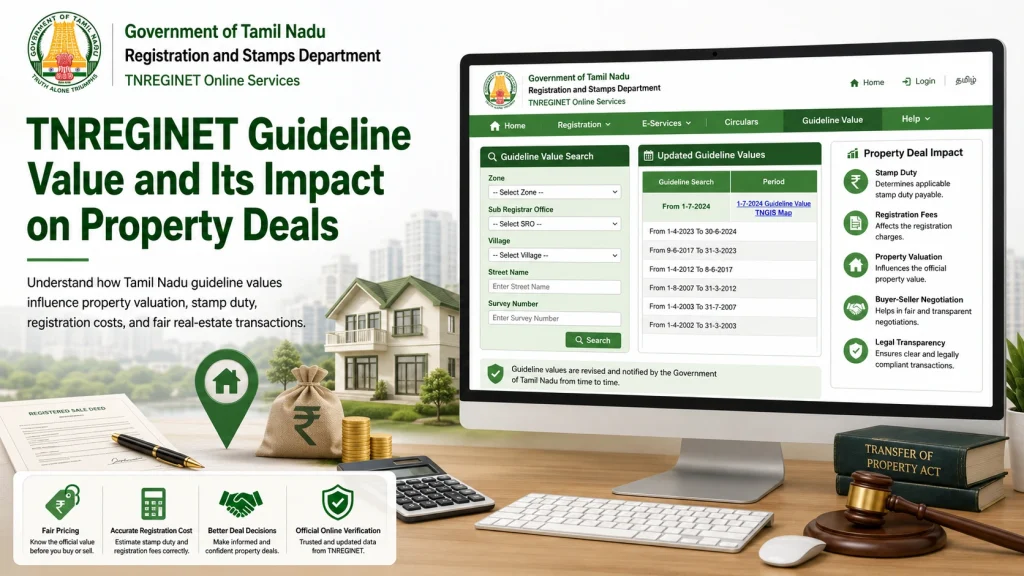
The stamp duty is calculated based on the guideline value. Higher guideline values increase the registration cost, while lower values reduce it.
Loan Sanctions by Banks
Banks often use guideline values to determine maximum loan eligibility. If the property’s guideline value is low, the sanctioned loan amount may also be lower, even if the market price is higher.
Property Negotiations
Knowing the official guideline value helps buyers and sellers set realistic prices. It ensures negotiations are fair and legally compliant.
Legal and Tax Compliance
Using the correct guideline value prevents disputes with sub-registrar offices and ensures accurate tax payments.
Mid-Year Changes and Their Effect on Transactions
Guideline values can change mid-year due to government notifications, corrections, or market adjustments. Mid-year updates can affect:
Always verify the current guideline value before completing a property deal.
How to Mitigate Disputes Due to Guideline Value
Table: Guideline Value Impact on Property Transactions
| Aspect | Impact of Guideline Value |
|---|---|
| Stamp Duty | Determines registration cost |
| Bank Loans | Affects maximum loan amount |
| Property Negotiations | Sets fair pricing reference |
| Legal Compliance | Ensures registration and tax accuracy |
| Tax Filing | Determines accurate transaction value for income tax |
Best Practices for Buyers and Sellers
Always verify the latest guideline value before negotiations.
Keep the certificate for documentation and bank approvals.
Factor the guideline value into stamp duty and registration fee calculations.
Monitor mid-year updates or government notifications.
Cross-check market value vs guideline value for a smooth transaction.
Legal Importance of Guideline Value in Property Deals
The guideline value is legally binding for:
Using the correct guideline value protects you from legal challenges and ensures smooth completion of property transactions.
FAQs
Final Words
TNREGINET guideline value plays a critical role in property deals, affecting stamp duty, registration fees, bank loans, and legal compliance. Buyers and sellers should always check the latest official values, download the certificate, and factor it into their negotiations. Being aware of mid-year changes, market trends, and legal requirements ensures transparent, fair, and legally compliant property transactions in Tamil Nadu.