How TNREGINET Calculates Guideline Value for Properties 2026
When buying or selling a property in Tamil Nadu, the guideline value is a key figure. It represents the minimum government-approved value used to calculate stamp duty and registration fees. Understanding how TNREGINET calculates this value helps buyers, sellers, and banks avoid discrepancies and ensures smooth property registration.
This guide covers everything you need to know, including how the value is calculated, how to check it, and how it impacts transactions.
What Is a Guideline Value?
A Guideline Value is the official rate set by the Tamil Nadu Registration and Stamps Department. It is used to:
It is important to note that guideline value is different from market value, which is the price agreed upon by the buyer and seller.
You can also read: Guideline Value Changes Mid-Year: What You Need to Know 2026
Factors TNREGINET Considers for Guideline Value
TNREGINET calculates the guideline value based on several factors:
Location of the Property
The district, zone, and area type (residential, commercial, or industrial) influence the value.
Property Type and Usage
Residential, commercial, agricultural, or industrial properties have separate guideline rates.
Area and Size
The built-up area or land size directly affects the rate per square foot or square meter.
Development Level of the Area
Developed areas with infrastructure, roads, and amenities usually have higher values than less-developed regions.
Previous Transaction Data
TNREGINET considers historical sale data in the area to align guideline values with recent trends.
Government Notifications
Guideline values are updated periodically via official government notifications.
How to Check Guideline Value on TNREGINET
To view the guideline value for a property:
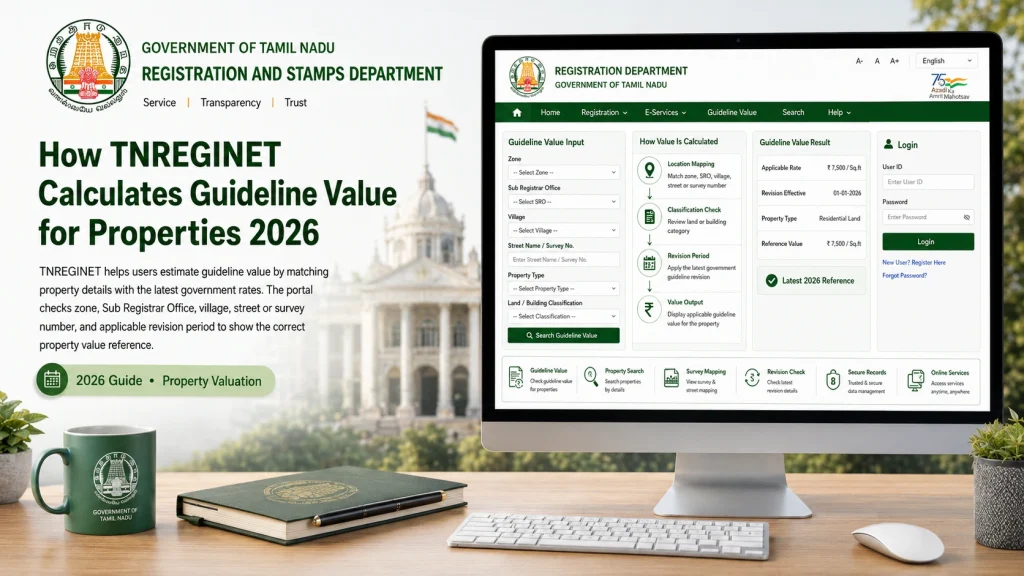
Visit the TNREGINET portal and select the Guideline Value Search section.
Enter property details such as district, zone, and survey number.
Select the property type (residential, commercial, etc.).
Click Search to see the current official guideline value.
Optionally, download the Guideline Value Certificate for legal or banking purposes.
Table: Key Factors vs Impact on Guideline Value
| Factor | How It Affects Value |
|---|---|
| Location | Prime areas have higher rates |
| Property Type | Commercial > Residential > Agricultural |
| Area / Size | Larger plots have higher total value |
| Development Level | Developed infrastructure increases value |
| Historical Transactions | Recent high-value sales influence rate |
| Government Updates | Official notifications periodically adjust values |
How TNREGINET Updates Guideline Values Annually
Guideline values are updated regularly to reflect changes in the property market. TNREGINET considers:
These updates ensure that property registration and stamp duty calculations are fair and up-to-date.
How to Use Guideline Value in Property Transactions
Common Mistakes to Avoid
Avoiding these mistakes ensures smoother transactions.
FAQs
Final Words
Understanding how TNREGINET calculates guideline value is essential for buyers, sellers, developers, and banks. Factors like location, property type, area, development level, historical data, and government updates determine the official value. Checking and using this value ensures accurate stamp duty calculation, smooth registration, and legal compliance.
Always check the latest values on TNREGINET before completing a transaction, and download the Guideline Value Certificate for documentation and official use.