How to Cross-Check EC with Patta and Chitta Update (2026)
When you’re dealing with property transactions in Tamil Nadu, it’s crucial to ensure that the property you’re interested in is free from legal encumbrances. While the Encumbrance Certificate (EC) confirms the legal ownership of the property and ensures it’s free from any financial liabilities, it’s also important to cross-check it with other vital documents like Patta and Chitta.
Both Patta and Chitta are official documents related to land ownership in Tamil Nadu, and cross-checking them with the EC provides a more comprehensive understanding of the property’s legal status.
In this article, we will explain how to cross-check the EC with Patta and Chitta, and why it’s important for property transactions.

What is an Encumbrance Certificate (EC)?
An Encumbrance Certificate (EC) is a document that records all the transactions (mortgages, loans, liens, etc.) associated with a property. It is an essential document for proving the legal status of the property and is required for purposes like property sale, home loans, and inheritance claims.
The EC can be obtained from the TNREGINET portal by entering property details like the survey number, document number, and year of registration.
You can also read: Can You Get EC Without Login on TNREGINET? Update (2026)
What is Patta?
Patta is a government-issued document that certifies the ownership of land in Tamil Nadu. It is issued by the Revenue Department and indicates the person(s) who have legal rights to the land. A Patta also includes details such as:
A Patta is essential to prove ownership, especially for agricultural and non-agricultural land.
What is Chitta?
Chitta is a revenue record document that provides detailed information about the ownership of land, the extent of the land, and the classification of the land. It specifically highlights:
Chitta is typically linked with Patta and is used to confirm the exact boundaries and ownership of the land.
Why Cross-Check EC with Patta and Chitta?
Cross-checking the EC with Patta and Chitta is important because:
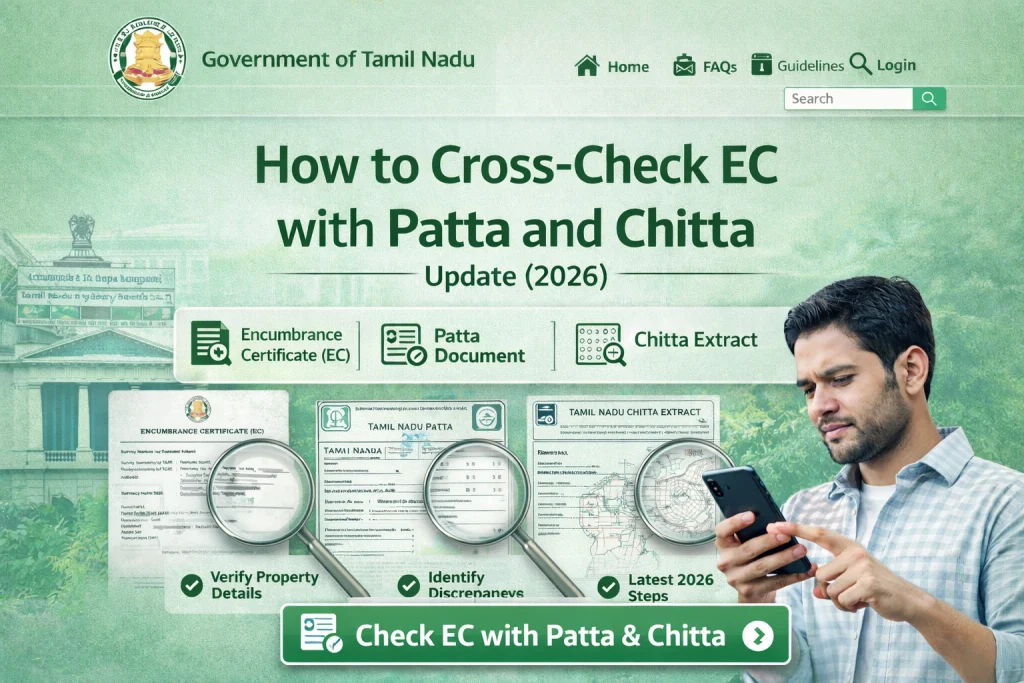
Verify Ownership
Patta and Chitta are the official records that indicate land ownership, while EC confirms the property’s legal transactions. By checking these documents together, you can confirm the legal owner and ensure that there are no discrepancies in the transaction history.
Confirm Property Title
If you’re buying a property, you want to make sure that the title of the property is clear. The EC will show you any financial encumbrances, while Patta and Chitta will tell you about the rightful owner and land classification.
Prevent Future Issues
Cross-checking helps prevent potential disputes or problems in the future related to property ownership, title disputes, or land classification.
Ensure the Property is Free of Legal Liabilities
The EC will confirm if there are any unpaid mortgages or loans, while the Patta and Chitta will give you the complete ownership history, ensuring that the property is free from any legal issues.
How to Cross-Check EC with Patta and Chitta
Step 1: Obtain the EC, Patta, and Chitta
Before proceeding, ensure you have the following documents:
Chitta: The Chitta is also available through the Revenue Department or local taluk office. The Chitta can often be accessed online through the official portal of the Tamil Nadu government.
EC: You can download the Encumbrance Certificate (EC) from TNREGINET by logging in with your account and entering the property details.
Patta: The Patta can be obtained from the Revenue Department or from the local taluk office. You can also check the Patta status online through the Tamil Nadu Revenue Department website.
Step 2: Verify Property Details
Check the survey number, owner name, and property extent mentioned in the Patta and Chitta. These details should match with the property details mentioned in the EC.
Verify the Owner Name: The owner’s name in the Patta and Chitta should match the name of the person or entity listed in the EC.
Check the Survey Number: The survey number listed in the EC, Patta, and Chitta should be identical.
Step 3: Compare Legal Information
EC: Review the legal transaction history shown in the EC (e.g., mortgages, loans, and any legal encumbrances).
Patta: Ensure that the Patta lists the property as belonging to the correct individual or entity. If there’s a discrepancy between the name on the Patta and the EC, you should investigate further.
Chitta: The Chitta should confirm the land type (e.g., wetland, dry land) and classification. Ensure that the land type and classification in the Chitta match the intended use for the property (e.g., residential, commercial).
Step 4: Check for Legal Discrepancies
If the Patta or Chitta show discrepancies in land details or ownership, it could indicate that the property’s title isn’t clean. Similarly, if the EC reveals any unresolved encumbrances (e.g., loans or mortgages), it may indicate financial issues tied to the property.
Common Issues You Might Find During Cross-Checking
Discrepancy in Owner Name
If the owner’s name in the Patta or Chitta does not match the owner’s name listed in the EC, this could signal potential issues with the title or transfer of ownership.
Missing EC Records
If the EC does not show up for a property that is listed in the Patta and Chitta, it may mean that the property has no legal transaction history or the data hasn’t been updated.
Land Type Mismatch
If the Chitta shows a different land type (e.g., agricultural land) than what’s intended for the property (e.g., residential), this could indicate problems with the land’s classification for specific uses.
Unresolved Encumbrances
If the EC reveals an outstanding mortgage or lien on the property, while the Patta and Chitta suggest that the land is free of encumbrances, you should seek clarification from the property seller and the local authorities.
FAQs
Final Words
Cross-checking the Encumbrance Certificate (EC) with the Patta and Chitta is an important step in confirming the legitimacy of a property transaction. By ensuring that the details on these documents match, you can ensure that the property is free from legal disputes and encumbrances, giving you confidence when buying property.
If discrepancies arise, it’s crucial to visit the sub-registrar’s office or Revenue Department to resolve the issues before proceeding with the transaction.