EC Certificate Delays: Causes and How to Resolve Them (2026)
When applying for an Encumbrance Certificate (EC) through TNREGINET, many users experience delays. This can be frustrating, especially if the certificate is required for property transactions, bank approvals, or legal purposes. Understanding the causes of delays and the right steps to resolve them can save time and reduce stress.
Common Causes of EC Certificate Delays
Incomplete or Incorrect Property Details
Submitting wrong survey numbers, district, subdivision, or property type can cause the system or sub-registrar office to reject or delay processing.
Pending Registrations
Recent property transactions may still be under verification at the sub-registrar office, delaying the EC issuance.
High Workload at Sub-Registrar Offices
Peak periods or heavy application volumes can increase processing time.
System or Portal Issues
Server downtime, slow responses, or PDF generation glitches on TNREGINET may temporarily delay certificate availability.
Document Verification Issues
Missing or incomplete supporting documents may require manual intervention, causing delays.
How to Track the Status of Your EC
Monitoring your application can help identify delays early:
Regular tracking helps you understand where the delay is occurring and take timely action.
You can also read: Can I Track EC Application Status on TNREGINET Update 2026?
Steps to Resolve EC Certificate Delays
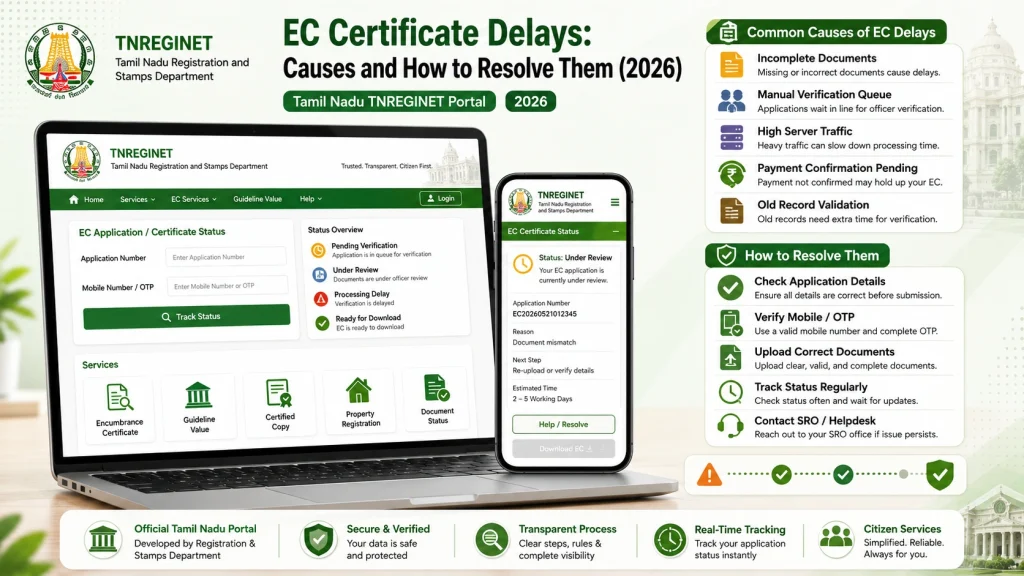
Verify Property Details
Double-check survey number, subdivision, and district. Submit corrections if needed.
Ensure Documents Are Complete
Make sure all required supporting documents are uploaded or submitted to the sub-registrar.
Retry or Refresh Online Application
Sometimes portal issues cause temporary delays. Log out, clear cache, and try again.
Contact Sub-Registrar Office
Reach out to the local office to inquire about pending verification or approval status.
Escalate to TNREGINET Helpdesk
If delays persist despite accurate details, submit a support request for assistance.
Table: Causes vs Resolution
| Delay Cause | How to Resolve |
|---|---|
| Incorrect property details | Verify and correct survey number, subdivision, district |
| Pending registration | Wait for approval; check status regularly |
| High workload | Track application, be patient during peak periods |
| Portal or system issues | Retry download, clear cache, use desktop browser |
| Document verification issues | Submit all required documents and request verification |
Tips to Avoid EC Certificate Delays
Understanding Why Some EC Applications Take Longer
Some applications naturally take more time due to:
Properties with multiple owners or complex ownership history
Pending court cases or disputes associated with the property
High-value transactions that require additional verification
Knowing these factors can help you manage expectations and plan property deals accordingly.
How TNREGINET Ensures Verification Accuracy
While delays are inconvenient, they exist to maintain accuracy and legality. TNREGINET performs:
This ensures that the EC you receive is complete and legally valid.
FAQs
Final Words
EC certificate delays on TNREGINET are often caused by input errors, pending registrations, or system issues. By submitting accurate details, tracking the application, and contacting the sub-registrar when necessary, you can reduce waiting time and ensure timely access to your certificate.
Understanding the reasons behind delays also helps you plan property transactions efficiently and avoid unnecessary frustration.