How Guideline Value Affects Property Prices in TNREGINET 2026
When you buy or sell property in Tamil Nadu, one of the key factors you’ll come across is the Guideline Value. But what exactly is it, and how does it affect property prices in TNREGINET? Let’s break it down in simple terms to help you understand its role in property transactions.
What Is Guideline Value?
In Tamil Nadu, the Guideline Value is the minimum value set by the government for property transactions. It is used to calculate stamp duty and registration fees when you buy or sell a property. The government updates the guideline value for different areas, depending on factors like the type of property (land or building), location, and the area’s development.
You can also read:How to Correct Mistakes in Your TNREGINET EC Record 2026
How Does Guideline Value Affect Property Prices?
Property Valuation for Registration
The guideline value plays a major role in determining the official value of the property when you register it. It is used by the Sub-Registrar Office (SRO) to calculate the stamp duty and registration fees during the sale or purchase process.
The guideline value helps the government ensure that the property is not sold for an amount below its assessed value.
If you are buying a property, the guideline value will influence the amount of stamp duty you need to pay.
Example:
Let’s say you’re buying a piece of land for INR 20 lakhs, but the guideline value for that area is INR 25 lakhs. Even though the transaction price is INR 20 lakhs, the stamp duty will be calculated based on the higher guideline value of INR 25 lakhs.
Impact on Market Prices
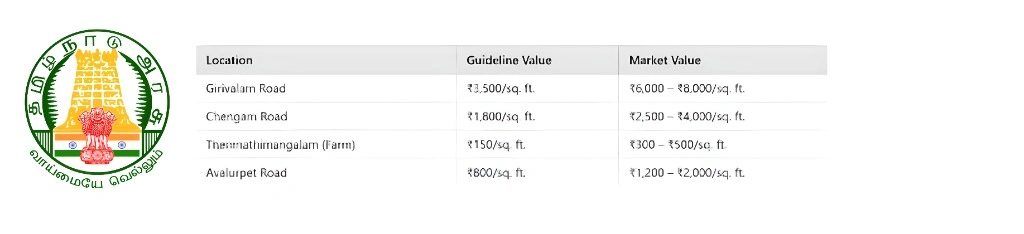
While the guideline value is an important factor in property transactions, it doesn’t necessarily reflect the actual market value. Market prices often fluctuate based on demand, location, and property features, while guideline values tend to be updated periodically by the government.
In Low Demand Areas: Conversely, in less sought-after areas, the market price might be lower than the guideline value, but the guideline value still serves as the minimum value for stamp duty calculations.
In High Demand Areas: If your property is located in an area that is in high demand (like a popular neighborhood or city center), the market price might be significantly higher than the guideline value.
Buying Below the Guideline Value
You cannot register a property below the guideline value, even if the buyer and seller agree to a lower price. This is done to prevent undervaluation of properties, which could lead to a loss in government revenue.
Example:
Suppose you and the seller agree to a price of INR 18 lakhs for a property, but the guideline value is INR 22 lakhs. Even though both parties have agreed to INR 18 lakhs, the sale will be registered based on INR 22 lakhs, and the stamp duty will be calculated on that amount.
How to Check the Guideline Value on TNREGINET?
To know the guideline value of your property or an area, you can easily check it through the TNREGINET portal. Here’s how:
This tool helps you know if the property you are interested in is priced higher or lower than the official guideline value.
Why is Guideline Value Important?
Legal Transactions: It helps ensure transparency in property transactions.
Fair Taxation: It provides a standard for calculating taxes, fees, and stamp duties, making sure that everyone pays their fair share.
Property Assessment: It helps in assessing properties for government purposes like land acquisition or urban planning.
FAQs
Final Words
The Guideline Value in TNREGINET is a key element in property transactions. While it may not always match the market value, it plays a significant role in determining the legal sale price for the purpose of registration and stamp duty calculation. Whether you’re buying or selling property, it’s important to check the guideline value beforehand to avoid any surprises during the registration process.
If you want to know the exact guideline value of your property or area, simply visit the TNREGINET portal. It’s an essential tool that can help ensure a smooth property transaction process!