How TNREGINET Handles Guideline Value Discrepancies (2026)
When buying or selling property in Tamil Nadu, the guideline value is the government-set minimum value used to calculate stamp duty and registration fees. Sometimes, property buyers, sellers, or banks notice that the market value of a property is higher or lower than the TNREGINET guideline value. This can create confusion or discrepancies during registration.
TNREGINET has processes to handle such situations and ensure proper registration while following government rules.
What Causes Guideline Value Discrepancies
Discrepancies usually occur due to:
Market fluctuations:
The property’s actual selling price may be higher than the guideline value in the portal.
Different property zones:
Guideline values are set per zone or area and may not reflect unique characteristics of the property.
Old data updates:
Guideline values are updated periodically, so older values may not match current market rates.
Input errors:
Mistakes in entering survey numbers, sub-division, or area size can show incorrect guideline values.
Understanding why discrepancies happen helps buyers and sellers plan their registration correctly.
You can also read: Is TNREGINET’s EC Certificate Accepted by Banks for Loans?
How TNREGINET Resolves Discrepancies
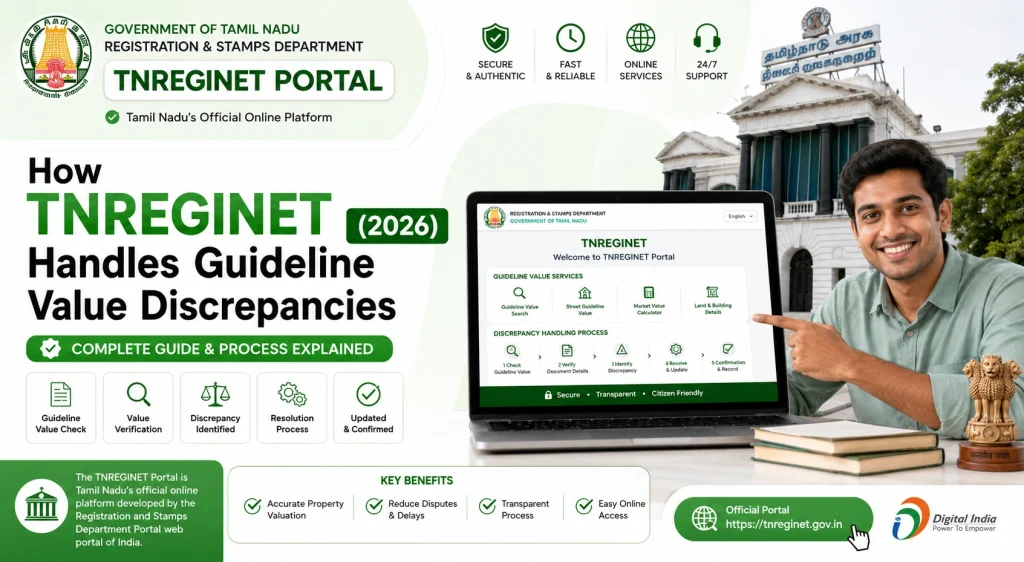
TNREGINET ensures transparency and compliance by following these steps:
Automatic Alerts:
The portal may flag properties where the entered market value is below the guideline value, prompting the user to check details.
Manual Verification:
If a discrepancy is found, the registering officer may manually verify the property documents before approval.
Document Review:
Buyers or sellers may need to provide additional documents like property agreements, valuation reports, or sale deeds to justify the actual market price.
Stamp Duty Calculation:
The final stamp duty is usually calculated based on the higher of the market value or guideline value, ensuring compliance with legal requirements.
Correction Requests:
If the portal shows an incorrect guideline value due to input errors or zone misclassification, users can request correction through TNREGINET’s helpdesk or the local sub-registrar office.
Tips to Avoid Guideline Value Issues
Always double-check property zone and survey details before registration.
Keep official documents ready to justify the property’s market price.
Compare current guideline values on TNREGINET before negotiations.
Consult with the sub-registrar office if there are significant differences.
By following these steps, you can prevent delays in property registration and avoid disputes with banks or legal authorities.
Common Scenarios When Discrepancies Happen
Common Scenarios When Discrepancies Happen
High-value property sales:
The market price may be much higher than guideline value.
Newly developed zones:
Updated market conditions may not reflect in TNREGINET yet.
Old properties:
Older guideline values might be outdated, causing confusion.
Boundary or survey errors:
Incorrect details in the system can show wrong values.
Recognizing these scenarios helps you address issues proactively.
How Buyers and Sellers Can Handle Discrepancies
FAQs
Final Words
Guideline value discrepancies are common, but TNREGINET has clear measures to handle them. By understanding the rules, preparing proper documents, and double-checking property information, buyers and sellers can ensure smooth registration.
Awareness of these processes saves time, prevents errors, and ensures compliance with legal and bank requirements.