Understanding TNREGINET’s Market Value vs. Guideline Value
When dealing with property transactions in TNREGINET Tamil Nadu, two key terms you’ll often come across are Market Value and Guideline Value. Both of these are used to determine the value of a property, but they serve different purposes and are calculated differently. If you’re buying, selling, or registering property, understanding the distinction between these values is crucial for navigating taxes, stamp duties, and legal procedures.
Here’s a breakdown to help you understand the difference between TNREGINET’s Market Value and Guideline Value, and why both are important.
What Is Guideline Value?
The Guideline Value is the minimum value set by the Tamil Nadu government for property transactions in a particular area. It is also referred to as the Stamp Duty Value because it is primarily used to calculate the stamp duty and registration fees when a property is bought or sold.
Key Points:
Government Set Value: The Guideline Value is determined by the government for various types of properties based on location, land use, and the prevailing market conditions in a specific area.
Mandatory for Registration: The Guideline Value is the base value used to calculate the stamp duty for property transactions.
Area-Specific: It varies from one location to another. For example, properties in urban areas will have a higher guideline value compared to properties in rural or less developed areas.
How It’s Used:
The Guideline Value is used to calculate the stamp duty and registration charges during property transactions. This is mandatory in Tamil Nadu for property registration. The stamp duty is usually a percentage of the Guideline Value of the property.
You can also read: How to Fix Guideline Value Errors on TNREGINET Update 2026
What Is Market Value?
The Market Value, on the other hand, is the actual price at which the property is bought and sold in the open market. This value is based on the supply and demand for the property, the condition of the property, and other market factors.
Key Points:
Actual Transaction Value: The Market Value reflects the actual price agreed upon between the buyer and seller in a transaction.
Varies with Market Conditions: Unlike the Guideline Value, the Market Value can fluctuate due to various factors, such as the property’s location, infrastructure development in the area, and the state of the real estate market.
Negotiable: The Market Value is usually negotiated between the buyer and seller. It may be higher or lower than the Guideline Value based on the market conditions.
How It’s Used:
The Market Value is what is typically paid in a property transaction. It is the price recorded in the sale deed.
Banks and financial institutions often consider the Market Value of a property when determining loan eligibility and mortgage value.
Difference Between Guideline Value and Market Value
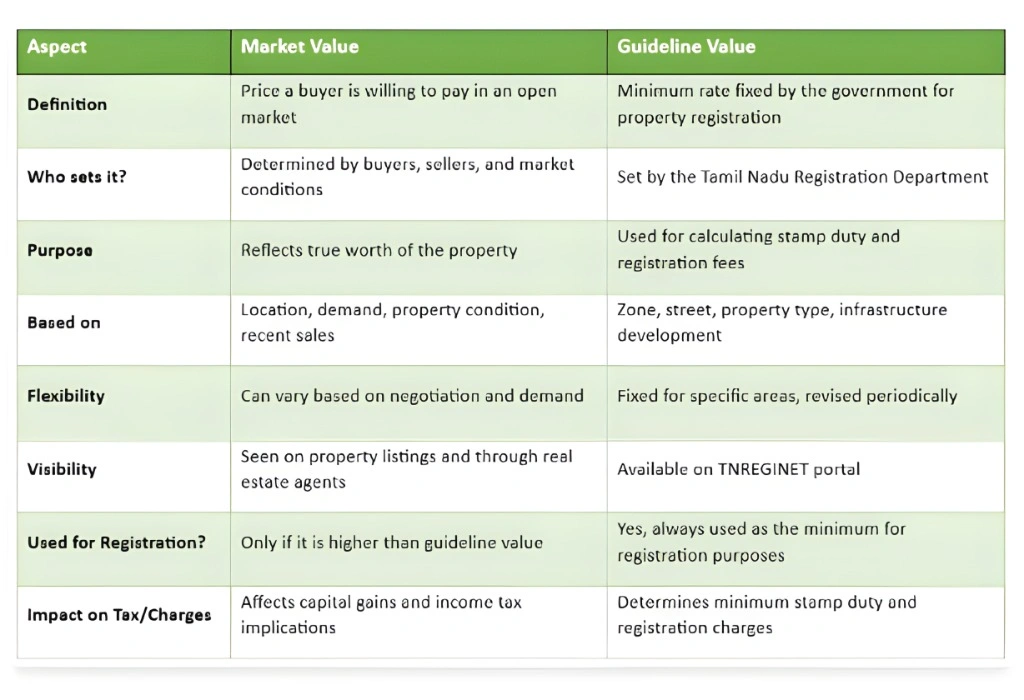
| Aspect | Guideline Value | Market Value |
|---|---|---|
| Definition | The minimum value set by the government for property transactions. | The actual price at which a property is bought and sold in the market. |
| Authority | Determined by the Tamil Nadu government. | Determined by market conditions and negotiations between buyer and seller. |
| Purpose | Used to calculate stamp duty and registration charges. | Represents the actual transaction price for property deals. |
| Set By | Government (based on location and type of property). | Market forces (supply, demand, condition of the property, etc.). |
| Variation | Fixed by the government and varies by location and property type. | Fluctuates based on market trends and property condition. |
| Usage | Mandatory for property registration. | Used to assess actual purchase price in a transaction. |
Why Is There a Difference Between Guideline Value and Market Value?
The Guideline Value is generally lower than the Market Value because it is set by the government and only takes into account factors like location, property type, and area. It doesn’t factor in specific market dynamics such as demand, property condition, and negotiation between the buyer and seller.
Guideline Value: Primarily a minimum value to ensure that the state receives adequate taxes, including stamp duty.
Market Value: Reflects actual market conditions and can be higher or lower than the guideline value depending on how much buyers are willing to pay for the property.
For example, if the Guideline Value of a property is ₹50 lakhs, but the buyer and seller agree on a price of ₹60 lakhs based on demand or negotiations, the Market Value of that property will be ₹60 lakhs, which is what will be used in the actual transaction.
Importance of Both Values in Property Transactions
Guideline Value:
For Stamp Duty: The Guideline Value is used to calculate stamp duty during property registration. Even if the Market Value is higher, the stamp duty is often calculated based on the Guideline Value, unless the market value is higher than the guideline value.
Transparency in Taxation: It ensures transparency and standardization in property taxation by setting a baseline value for transactions.
Market Value:
Actual Transaction Value: The Market Value is what the buyer actually pays for the property. It can be higher than the Guideline Value due to various factors, including the condition of the property, amenities, and demand in the area.
Loan Assessment: When applying for a home loan, banks and financial institutions generally look at the Market Value of the property to determine the loan amount they can offer.
How to Check Both Values in TNREGINET
To make informed decisions about property transactions, you need to know both the Guideline Value and Market Value of a property.
Guideline Value:
Visit the TNREGINET Portal at tnreginet.gov.in.
Search for your property’s details using the Survey Number or Document Number.
The system will display the Guideline Value for that property, which is the official minimum value used for property registration.
Market Value:
- The Market Value is typically negotiated between the buyer and seller. However, for an idea of the current Market Value, you can consult:
FAQs
Final Words
Understanding the difference between Guideline Value and Market Value is crucial for anyone involved in property transactions in Tamil Nadu. The Guideline Value is set by the government for calculating taxes and duties, while the Market Value reflects the actual price paid in a property deal. By knowing both values, you can ensure that you are making informed decisions about property transactions, registration, and legal documentation.