Understanding TNREGINET’s Guideline Value for Rural Areas
If you’re planning to buy, sell, or register property in rural areas of Tamil Nadu, one of the most important aspects you’ll need to understand is the Guideline Value. The TNREGINET Portal — Tamil Nadu’s official platform for property registration and land records — allows you to check the Guideline Value for properties, including those located in rural areas.
But how does the Guideline Value work in rural areas? Does it differ from urban areas? Let’s dive into the details to help you better understand the Guideline Value for rural properties and how to check it on TNREGINET.
What is Guideline Value?
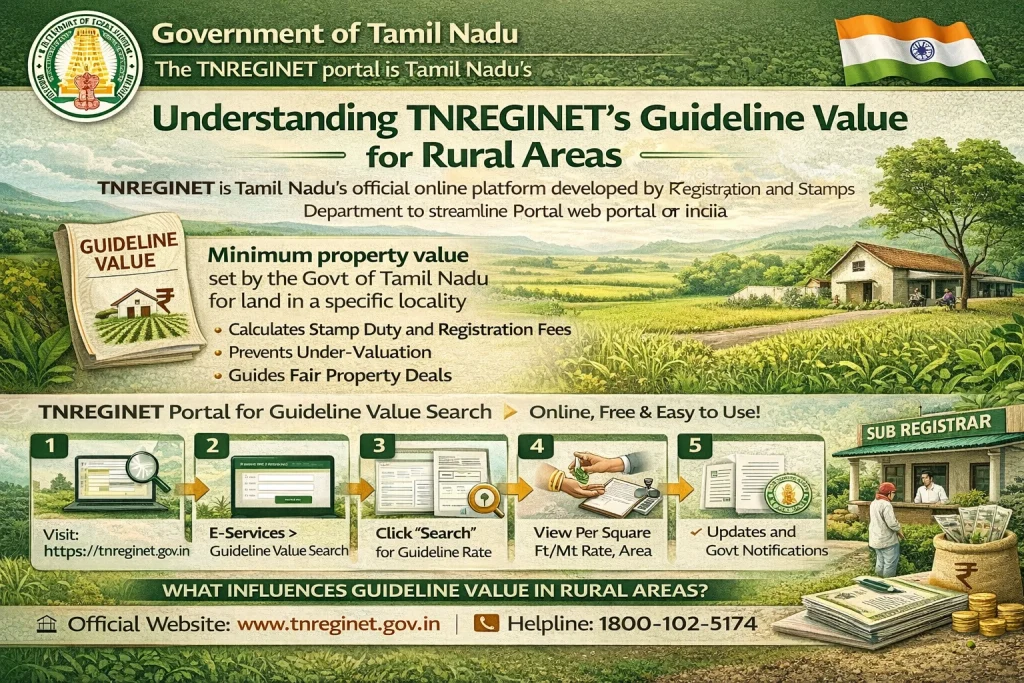
The Guideline Value is the minimum value set by the government for registering a property. It is used to calculate stamp duty and registration charges during the registration process. This value is determined based on various factors like:
In rural areas, the Guideline Value is often lower than in urban areas due to the difference in demand, infrastructure, and development.
You can also read: How to Check Guideline Value History for Your Property 2026
How is Guideline Value Determined for Rural Areas?
The Guideline Value in rural areas is set based on:
Location: Rural areas with less development, fewer amenities, and lower demand generally have a lower Guideline Value than urban properties.
Type of Land: The Guideline Value for agricultural land in rural areas is typically much lower compared to residential or commercial properties.
Accessibility and Infrastructure: Rural areas with limited access to roads, schools, and other infrastructure usually have a lower Guideline Value.
Size of the Property: Larger properties in rural areas may still have a higher Guideline Value, but it is often still lower than the market value due to location factors.
For example, a residential plot in a village or a farm in a rural area will have a lower Guideline Value than a similar property in a metropolitan city like Chennai.
Why is the Guideline Value Lower in Rural Areas?
Lower Demand and Market Value
The demand for property in rural areas is generally lower than in urban centers. Fewer people are looking to buy property in these areas, so the Guideline Value is set lower to reflect this reduced demand.
Limited Infrastructure
Rural areas typically have fewer roads, public transportation, hospitals, and schools. Without these infrastructure amenities, the value of land remains low. The Guideline Value in these areas is a reflection of this limited development.
Agricultural Land Use
In rural areas, much of the land is used for agriculture. Agricultural land generally has a much lower Guideline Value than residential or commercial property because it has limited use and is not as lucrative for developers.
Government Policies
The Tamil Nadu government often keeps Guideline Values lower in rural areas to encourage affordable housing and farming. This helps keep land affordable for farmers and local residents.
How to Check the Guideline Value for Rural Areas on TNREGINET
You can easily check the Guideline Value for a property in rural areas using the TNREGINET Portal. Here’s how:
Step 1: Visit the TNREGINET Portal
Go to the official TNREGINET Portal (https://tnreginet.gov.in) from your web browser.
Step 2: Log in to Your Account
If you have an account, log in using your username and password.
If you don’t have an account, you can still search for the Guideline Value without logging in, but creating an account allows you to access more services.
Step 3: Enter Property Details
To search for the Guideline Value, you’ll need to provide some basic property details, such as:
For rural properties, the Survey Number is especially important for getting accurate results.
Step 4: Select the Date or Year
Select the Guideline Value year or date range you are interested in (e.g., for the current year or a previous year).
Step 5: Search and View the Result
Click on the Search button after entering the details. The portal will display the Guideline Value for the property in your rural area.
Step 6: Download the Guideline Value Certificate
If you need a formal certificate for your records or for registration purposes, you can download it directly from the portal. Just click on the Download or Print option to get a PDF version of the Guideline Value Certificate.
What to Do If the Guideline Value Seems Too Low or High?
If you believe the Guideline Value for your rural property is not accurate, you can:
Check with the Local Seva Center
If the Guideline Value doesn’t match your expectations, you can visit your local Seva Center or Registrar’s Office to verify the value. They can provide further assistance or clarify the reason behind the discrepancy.
Appeal for a Reassessment
In some cases, the Guideline Value can be reassessed. If you believe the value is too low or too high for your property, you can file a formal appeal for reassessment through the local authorities.
Consider Infrastructure Updates
If there are any recent infrastructure developments (e.g., new roads, schools, or public facilities) that could increase the value of your rural property, it’s worth checking if the Guideline Value will be updated in the next revision.
FAQs
Final Words
The Guideline Value is an important factor when it comes to property transactions, especially in rural areas of Tamil Nadu. By understanding how the Guideline Value is determined for rural properties, you can make better decisions regarding property registration and stamp duty payments.
Checking the Guideline Value history and current value using the TNREGINET Portal can help you stay informed, and if the value seems off, you can always reach out for clarification or reassessment.