How to Interpret TNREGINET’s Guideline Value for Property
When dealing with property transactions in Tamil Nadu, one of the first things you’ll come across is the guideline value. This official minimum value set by the government helps in calculating stamp duty and registration fees for property transactions. If you’re new to property deals or just started using the TNREGINET portal, you might be wondering: What exactly is the guideline value, and how do I interpret it?
This article will walk you through what the guideline value is, why it matters, and how to interpret it when using TNREGINET for property transactions.
What is Guideline Value?
The guideline value is the minimum price set by the Tamil Nadu government for a property in a particular area. It helps ensure that property transactions are registered at a fair and standard value for stamp duty and registration purposes. It’s calculated based on factors like:
When you register a property on TNREGINET, the guideline value helps determine how much stamp duty and registration fees you need to pay. The government regularly updates these values based on the real estate market and regional development.
You can also read:How to Correct Incorrect Survey Numbers in TNREGINET 2026
Why Does Guideline Value Matter?
The guideline value is important because:
It standardizes property value assessments, ensuring that everyone pays a fair amount of stamp duty and registration fees.
It prevents undervaluation: Property buyers and sellers cannot register a property for less than the guideline value, ensuring that the state collects taxes based on the correct property value.
It helps determine loan eligibility: Banks and financial institutions often refer to the guideline value when offering home loans and mortgages to ensure that the property is valued appropriately.
How to Check Guideline Value on TNREGINET?
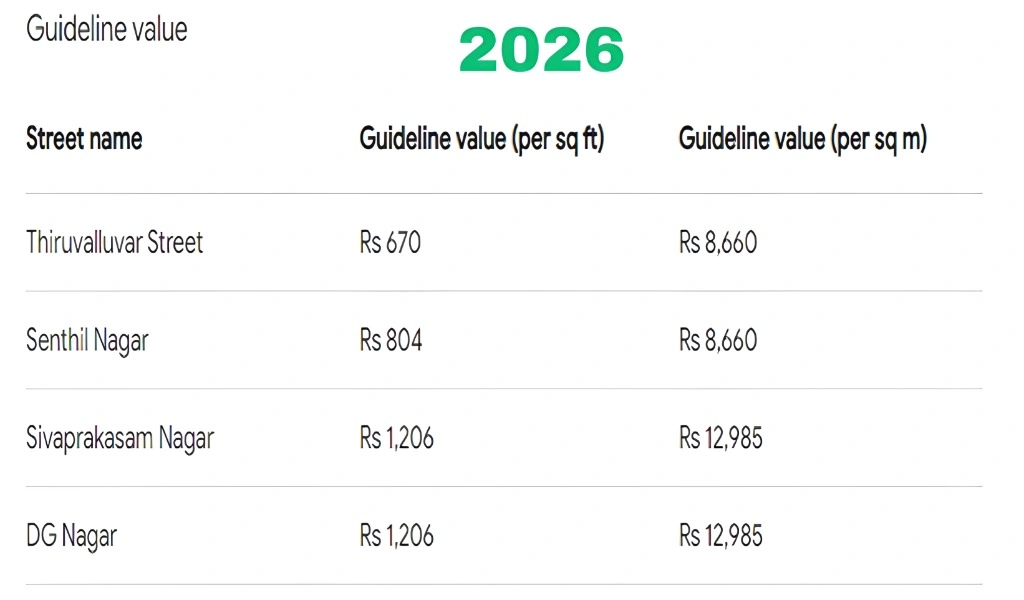
Here’s how to check the guideline value for a specific property on TNREGINET:
Visit the TNREGINET Portal:
Go to the official TNREGINET website:
https://www.tnreginet.gov.in
Navigate to the “Guideline Value Search” Section:
On the homepage, you will find the Guideline Value option. Click on “Guideline Value Search” or “Guideline Value” to begin your search.
Enter Property Details:
You’ll need to enter the following information: District: Select the district where the property is located.
Zone: Choose the appropriate zone for the property.
Sub-Registrar Office (SRO): Select the Sub-Registrar office where the property is registered.
Village: Enter the village name where the property is situated.
Survey Number: Provide the survey number or document number if available.
View Guideline Value: After entering the details, the portal will
View Guideline Value:
After entering the details, the portal will display the guideline value for the property, along with other related information.
Interpreting the Guideline Value
Once you have retrieved the guideline value for your property, here’s how to interpret it:
Understand the Area and Location
The guideline value varies depending on:
- Urban vs. Rural Areas: Properties in urban areas (cities or town centers) usually have higher guideline values than those in rural areas due to better infrastructure and higher demand.
- Popular Neighborhoods: In high-demand neighborhoods, the guideline value is generally higher because the properties in these areas are more valuable due to location and amenities.
For example, if you search for the guideline value in Chennai, you may see higher values for areas like T. Nagar or Adyar compared to areas like Ambattur or Perungudi, due to their proximity to commercial centers and infrastructure.
Check for Property Type
The guideline value also depends on the type of property:
- Residential Land: Generally has a lower guideline value compared to commercial land or industrial property, which can have higher values due to potential for business development.
- Commercial Property: A property intended for business purposes typically has a higher guideline value than residential land because it generates higher income.
For example, a residential plot in a suburban area may have a guideline value of INR 3,000 per square foot, while a commercial property in a city center may have a guideline value of INR 10,000 per square foot.
Determine the Market Price
While the guideline value sets a minimum price for property transactions, the actual market price may vary based on factors such as:
Negotiations between buyer and seller: The buyer and seller might agree on a price that’s higher or lower than the guideline value, but they cannot legally register the property for less than the guideline value.
Demand for property: High-demand areas may see transactions at values higher than the guideline value.
Property features: Properties with additional features such as modern construction, facilities, and proximity to amenities may have a higher market value.
Understand the Role in Taxation
The guideline value also plays a role in calculating property taxes. In Tamil Nadu, property tax is assessed based on the guideline value, so understanding the guideline value helps you gauge the property’s tax liability.
Example of Interpreting Guideline Value
Let’s say you’re interested in buying a property in Coimbatore. When you search on TNREGINET:
You find that the guideline value for a residential land in the Sungam area is INR 2,500 per square foot.
For a commercial property in the Race Course Road area, the guideline value is INR 7,000 per square foot.
This means:
The residential land in Sungam is valued at INR 2,500 per square foot as the minimum price for registration and stamp duty purposes.
The commercial property on Race Course Road is valued at INR 7,000 per square foot, reflecting its higher market demand and commercial potential.
FAQs
Final Words
Understanding and interpreting the guideline value on TNREGINET is key to understanding property valuation in Tamil Nadu. Whether you’re buying, selling, or registering a property, the guideline value is an important benchmark for legal and financial transactions. By knowing how to check and interpret it, you can ensure that your property transaction is fair and legally compliant.