Can EC Be Used for Loan Applications in Tamil Nadu? (2026)
If you’re applying for a home loan, property loan, or balance transfer in Tamil Nadu, one document most lenders ask for is the Encumbrance Certificate (EC). But what exactly is an EC, and can it be used for loan applications in TN? This article explains everything you need to know in a simple way.
What Is an Encumbrance Certificate (EC)?
An Encumbrance Certificate (EC) is an official document that shows all legal transactions and charges on a property for a specific period. It lists details like:
It is a proof that your property doesn’t have any legal or financial burden (encumbrances), or it shows all the existing ones.
You can also read: Can You Get EC Without Logging In on TNREGINET? (2026)
Why Do Banks Ask for an EC During a Loan Application?
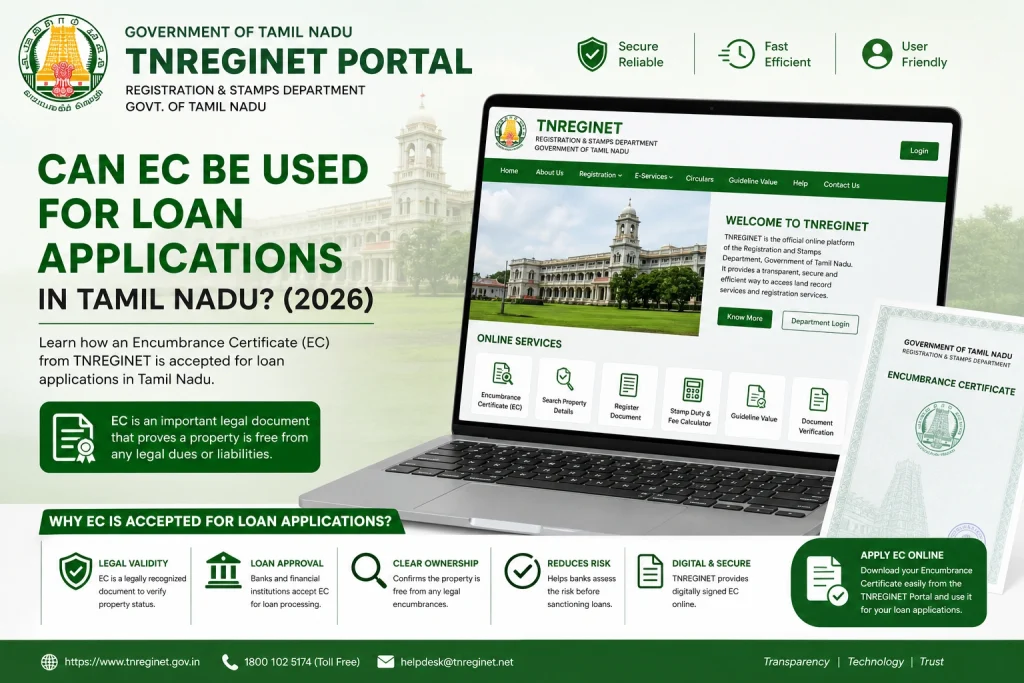
Banks and financial institutions ask for an EC because it helps them understand the property’s legal history and ownership status before approving a loan.
Here’s why EC is important for lenders:
Confirms Legal Ownership
An EC shows the chain of ownership — who owned the property and when.
This helps the bank confirm that you are the legal owner.
Shows Encumbrances
If a mortgage or charge already exists on the property, it will be listed on the EC.
Banks need this to know if other loans are already taken against the property.
Helps in Risk Assessment
Banks use the EC as part of verifying the property’s legal status before sanctioning a loan.
Required for Loan Documents
For most home loans or balance transfer loans, an EC is a standard requirement along with documents like:
Sale deed
Patta/Chitta
Khata extracts
Title search report
Can You Use EC for Loan Applications in Tamil Nadu?
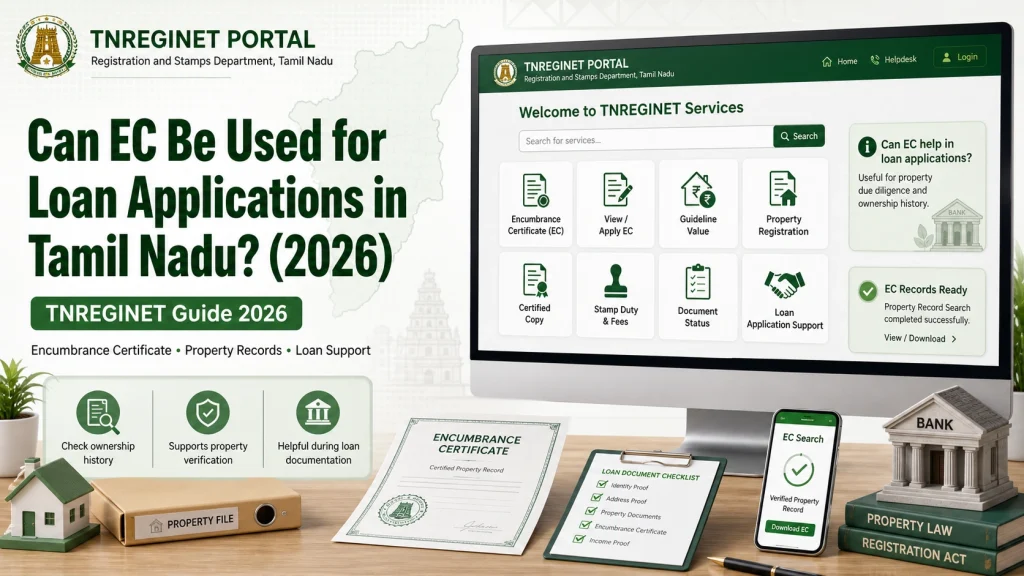
Yes, an EC is widely accepted by banks and financial institutions in Tamil Nadu as a valid document for loan applications.
Key Points
This makes EC an important part of the loan verification process, especially for home loans, balance transfer, and refinancing.
How to Use Your EC for a Loan Application
Here’s how EC helps during the loan process:
Step 1: Download the Correct EC
Download the EC from TNREGINET for the full legal period (usually 20–30 years)
Ask for a certified EC if the bank insists on an official copy
Step 2: Verify the EC Details
ure your EC shows:
- Your name as the legal owner
- Complete transaction history
- No missing or blank entries
If any entry is missing or incorrect, banks may ask for corrections first.
Step 3: Submit with Other Property Documents
When applying for the loan, submit the EC along with:
Title search or legal opinion (if required)
Sale deed
Patta / Chitta
Adangal
Latest tax receipts
Step 4: Bank Title Verification
The bank’s legal team will verify the EC and other documents. They may ask for additional documents or clarifications if needed.
What If the EC Shows Encumbrances?
If your EC lists existing encumbrances like another loan or mortgage:
The bank will review those carefully
In some cases, you may have to clear existing encumbrances before the new loan is approved
Some banks may still approve the loan depending on your credit profile and property value
FAQs
Final Words
Yes — EC from TNREGINET is accepted and often required for loan applications in Tamil Nadu. It helps banks verify legal ownership, check for existing encumbrances, and reduce risk before approving a loan.
Make sure your EC is:
Complete
Accurate
Covers sufficient years
This will make your loan process smoother and faster.