Guideline Value & EC: Know for Tamil Nadu Property (2026)
Buying or selling property in Tamil Nadu can be confusing if you don’t understand Encumbrance Certificates (ECs) and Guideline Values. These two documents are essential for property verification, legal safety, and calculating stamp duty.
In this guide, we’ll explain what guideline value and EC are, why they matter, and how to use them effectively when dealing with property in Tamil Nadu.
What Is Guideline Value?
The Guideline Value is the minimum property value set by the Tamil Nadu government for a specific area. It is used to:
Guideline values vary by district, street, survey number, and property type. They are updated regularly to reflect market conditions.
You can also read: TNREGINET Mobile App: Benefits and Features Explained (2026)
What Is an Encumbrance Certificate (EC)?
An Encumbrance Certificate (EC) is a legal document showing all registered transactions and encumbrances on a property for a specified period. It includes:
ECs are crucial because they help you confirm whether a property has any financial liabilities, loans, or legal issues.
Why Guideline Value and EC Are Important
Buyer Safety:
Before purchasing, EC and guideline value help you confirm ownership and avoid hidden liabilities.
Bank Loan Requirement:
Banks often check the EC and compare the sale price against the guideline value before approving property loans.
Legal Verification:
EC ensures that all registered transactions are recorded, while guideline value ensures the property is priced according to government rules.
Property Tax Planning:
Guideline value helps calculate correct stamp duty and registration fees.
How to Check Guideline Value and EC in Tamil Nadu
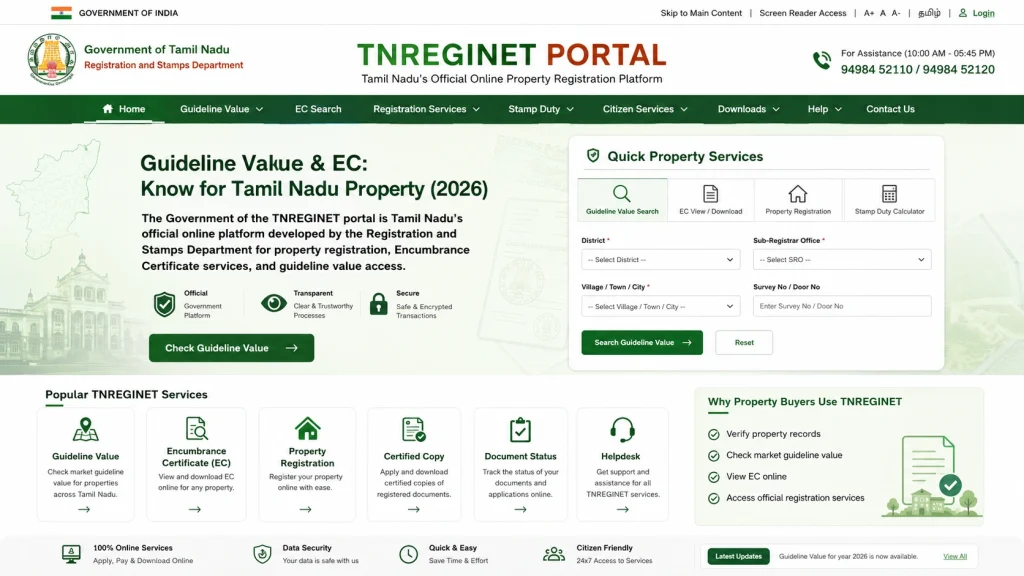
Tip: Always use correct SRO and survey details to avoid missing entries.
Tips for Buyers and Sellers
Check EC for a longer period:
Avoid checking only the last few years. Many buyers check at least 13 years.
Compare sale price with guideline value:
If the property is being sold below guideline value, confirm legality.
Cross-check property details:
Ensure survey number, subdivision, village, and owner names match your documents.
Use certified copies if needed:
For old properties or legal disputes, a certified copy from the SRO may be required.
FAQs
Final Words
Understanding Guideline Value and EC is critical for safe property transactions in Tamil Nadu. EC ensures there are no hidden liabilities, while guideline value ensures the sale price follows government rules.
Before buying or selling property, always:
Check EC for the property
Compare price with guideline value
Verify survey, SRO, and owner details
Get certified copies if necessary
Seek legal advice if discrepancies appear
Using these tools properly can save time, money, and legal trouble in property transactions.