Is TNREGINET EC Valid for Home Loan? A Simple Guide (2026)
If you’re buying a home or planning to take a loan on your property in Tamil Nadu, you’ve probably heard the term “Encumbrance Certificate (EC)” — especially on the TNREGINET portal.
But the big question most people ask is:
Is the EC from TNREGINET valid for home loan approval?
The short answer is Yes — it is valid, but there are a few things you should know to make sure your loan gets approved smoothly.
Let’s break it down in plain English and with helpful tips you can use.
What Is an Encumbrance Certificate (EC)?
An Encumbrance Certificate is a legal document that tells you whether a property has any legal or financial issues — like a mortgage, loan, lien, or dispute — recorded against it. It covers all registered transactions for the property for a selected period of years.
In simple terms:
Banks require it to make sure they aren’t giving a loan against a property that has hidden liabilities.
You can also read: How to Verify TNREGINET Certificate Online Update (2026)
How Does TNREGINET Fit In?
TNREGINET is the official online portal of the Tamil Nadu Registration Department where you can:
This means you don’t have to go in person to the sub-registrar’s office — you can check and download your Encumbrance Certificate online.
Is TNREGINET EC Accepted by Banks for Home Loans?
Yes! Banks and financial institutions accept EC from TNREGINET for home loan processing — as long as the certificate is correct and covers the required period.
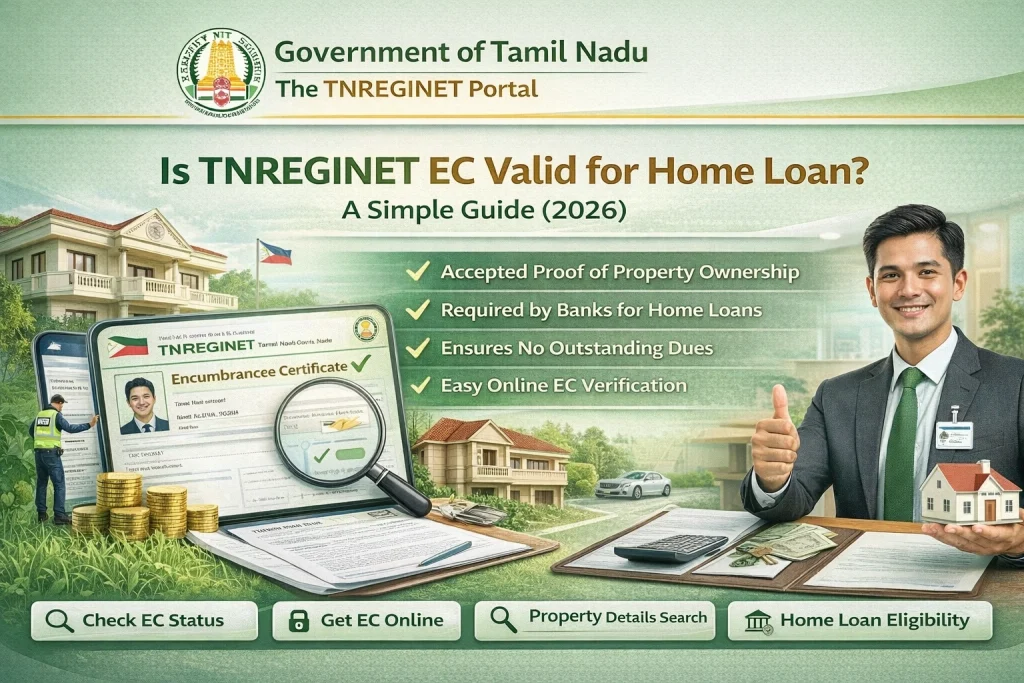
Here’s why:
How Many Years of EC Do Banks Usually Want?
Banks generally ask for EC covering past 10–15 years or more. Some lenders ask for up to 20–30 years depending on the property and loan amount.
Tip: When applying for a home loan, ask your bank or HFC exactly how many years of EC they want. That saves time and avoids rejection later.
TNREGINET EC Validity — How Long Is It Good For?
There’s no fixed “expiry date” for an EC — but the certificate is only valid for the period it covers. For example:
Tip: Always download the latest EC before submitting it to your bank.
What If EC Shows a Mortgage or Loan?
If the EC shows a mortgage or loan still attached to the property, banks may delay or reject your loan until:
So before applying for a home loan, double‑check your EC for any recorded mortgages.
What If You Can’t Access TNREGINET or Your EC?
Sometimes users face issues like the portal being down or their EC showing incorrect data. Here’s how to handle it:
Tip: Keep backup copies of all your property documents — including a hard copy of your EC — to avoid delays in case of system issues.
Quick Tips Before You Submit EC to the Bank
FAQs
Final Words
Yes — TNREGINET EC is completely valid for home loans in Tamil Nadu.
It’s an official document your bank will accept.
Just ensure the certificate is recent, correct, and covers the number of years your bank wants.
Getting this right can make your home loan process smooth and faster — and that’s exactly what you want when buying a home!
If you want, I can also create a step‑by‑step guide on how to download EC from TNREGINET specifically for home loan submissions