How to Integrate TNREGINET EC Search in Real Estate System
If you work in real estate and want to make property checks faster and smarter, integrating TNREGINET EC Search directly into your system can save time and reduce mistakes. It lets your real estate platform pull Encumbrance Certificate details from the official TNREGINET portal without manual lookup every time.
In this guide, I will explain what it is, why it is useful, and realistic ways to use it even if official APIs are not publicly available yet.
What Is TNREGINET EC and Why It Matters
TNREGINET is the official online portal of the Tamil Nadu Registration and Stamps Department. It lets anyone search and download important property documents like:
An Encumbrance Certificate shows all registered transactions on a property, including sales, mortgages, transfers, or legal liens over a period. It is a must-have before buying, selling, or giving a loan on a property.
For real estate apps and systems, having EC data means you can help clients verify titles or spot issues without leaving your workflow.
You can also read: Why EC Can’t Show Older Property Transactions in TNREGINET
Can You Directly Integrate TNREGINET EC Search
Can You Directly Integrate TNREGINET EC Search
Right now, TNREGINET does not publicly offer an official API that developers can plug straight into. Most searches require:
Integration is not as simple as calling an open API request, but there are still solid, compliant ways to bring TNREGINET EC checks into your system.
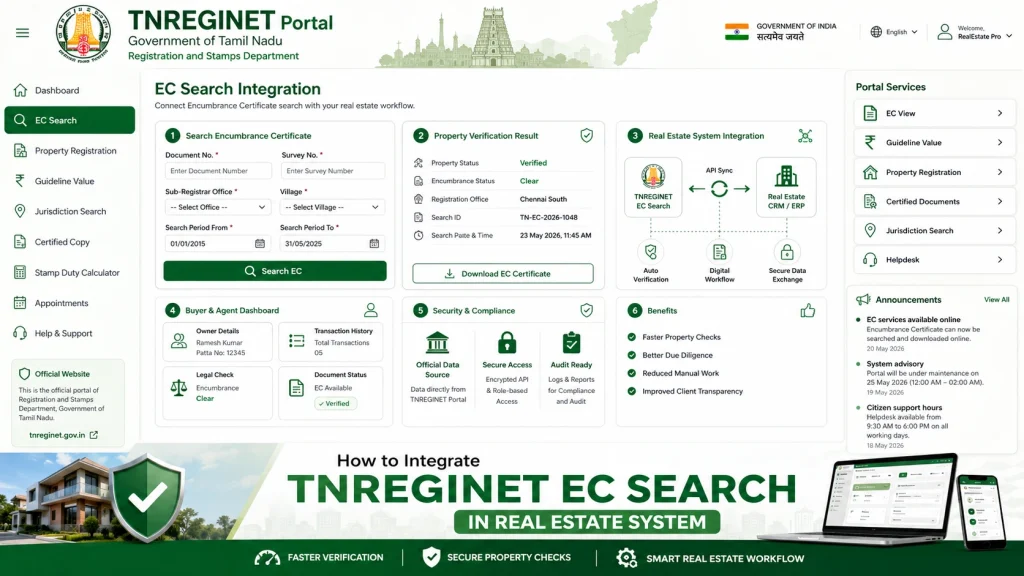
Smart Ways to Integrate EC Search Into Your Real Estate Platform
Manual Assisted Integration
If you do not have open API access, build tools to help users fetch EC data as part of your workflow:
- Add an EC search form in your system
- Ask users to input property details
- Provide a button that opens the TNREGINET portal in a new tab
- Guide users on steps to search EC and paste back results
- Let users upload their downloaded PDFs
This approach keeps your platform compliant and seamless for users.
Tip: Provide clear instructions so users do not make mistakes entering survey numbers or dates, which is a common source of errors.
Session-Based Browser Automation
For smoother flow, you can use session-based automation:
- Trigger a secure, browser-based session that logs into TNREGINET with user permission
- Capture EC search results inside that session
- Display results to your user inside your platform interface
This should be done with explicit consent from users and must follow TNREGINET rules. Logged-in sessions require human participation for CAPTCHA and OTP.
Build an Authorization Flow
For future-ready systems, consider:
Tracking document downloads
Collecting user consent
Letting users sign in once
Re-using session tokens for multiple searches
This provides the feel of integration without violating rules.
Step-by-Step Example Workflow
Here is what an integrated workflow might look like:
Benefits of Integrating TNREGINET EC Search
Real estate agents, buyers, and developers gain:
EC is essential for loan approvals and verifying a clean title. Users are willing to give consent for tools that make this process easier.
Tips for a Smooth Integration
Validate input locally before sending to TNREGINET to reduce failed searches.
Guide users through CAPTCHA and login steps.
Let users save EC PDFs easily and tag documents to specific properties.
Store only metadata such as dates, record numbers, and encumbrance flags, not the entire portal HTML.
Keep privacy clear by explaining why you are asking for credentials or consent.
Preparing for TNREGINET API in the Future
Even though there is no public API now, many government services are moving toward API-enabled systems. If TNREGINET releases an official API in the future, it might include:
Planning your system to support this later will keep it ready for the moment it becomes available.
Additional Integration Ideas
FAQs
Final Words
Integrating TNREGINET EC search into your real estate system does not have to be complicated. By guiding users, staying compliant, and keeping workflows smooth, you can save time, reduce errors, and offer a professional experience. Manual-assisted integration, session-based workflows, and future-ready planning make your system smarter and more trustworthy.
Start small, keep it simple, and your platform can become the go-to tool for property verification in Tamil Nadu.