TNREGINET Nil EC Meaning: Is Property Safe? (Update 2026)
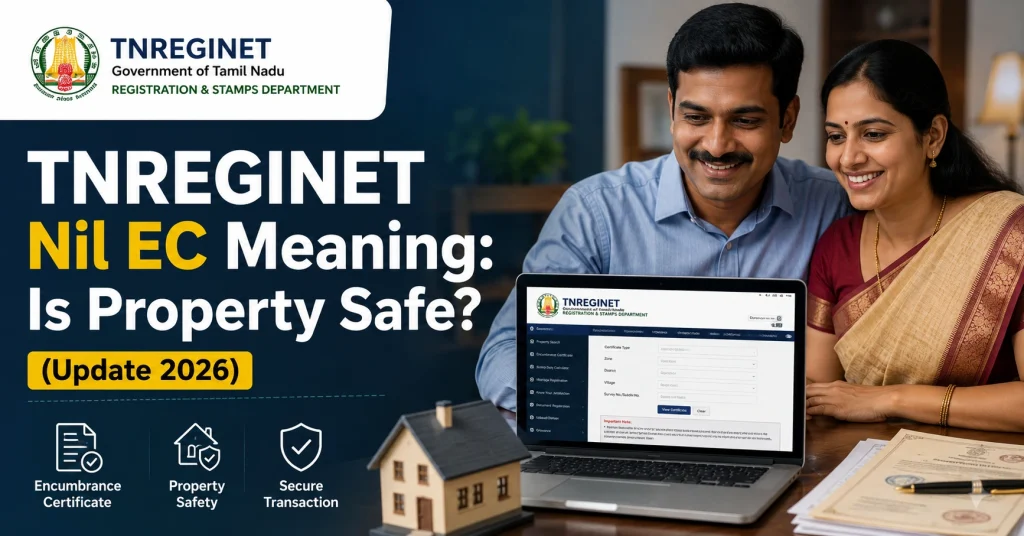
A Nil EC (Nil Encumbrance Certificate) on TNREGINET means that no registered transactions, loans, mortgages, or legal charges were found for the property during the selected search period.
However, a Nil EC does not guarantee that the property is completely safe to buy. Buyers should also verify ownership documents, patta, tax receipts, approvals, and legal disputes before making a purchase.
What Is a Nil EC in TNREGINET?
An Encumbrance Certificate (EC) is a document that shows the registered history of a property.
When TNREGINET displays “Nil EC”, it means:
In simple words, the property appears free from registered financial or legal burdens during the selected period.
You can also read: TNREGINET Document Verification Tips – Latest Update 2026
Nil EC Meaning at a Glance
| Item | Meaning |
|---|---|
| Nil EC | No registered encumbrance found |
| Mortgage Found | Property may have a loan |
| Sale Transaction Found | Ownership changed during search period |
| Court Attachment Found | Legal restrictions may exist |
| Gift/Settlement Found | Property transferred through registered deed |
Does Nil EC Mean the Property Is Safe?
Short Answer
No, not always.
A Nil EC is a positive sign but not a complete property verification report. Many buyers make the mistake of thinking that Nil EC equals a safe property. This is not completely true. A property can still have ownership disputes, family disputes, incorrect patta details, boundary issues, court cases, unapproved layouts, tax arrears, and fraudulent transactions. Legal experts recommend checking multiple documents before purchasing property.
What Does Nil EC Confirm?
A Nil EC confirms that no registered encumbrances were found during the selected period. It helps verify registered loans, registered mortgages, sale deeds, settlement deeds, partition deeds, gift deeds, and registered court attachments. This information comes from registration records maintained by the Registration Department.
What Does Nil EC NOT Confirm?
A Nil EC does not confirm the following:
| Check | Covered by Nil EC? |
|---|---|
| Ownership verification | No |
| Patta verification | No |
| Court disputes | Not always |
| Family disputes | No |
| Tax dues | No |
| Layout approval | No |
| Building approval | No |
| Property boundaries | No |
| Possession status | No |
This is why buyers should never depend only on an EC.
Step-by-Step Guide to Check Nil EC on TNREGINET
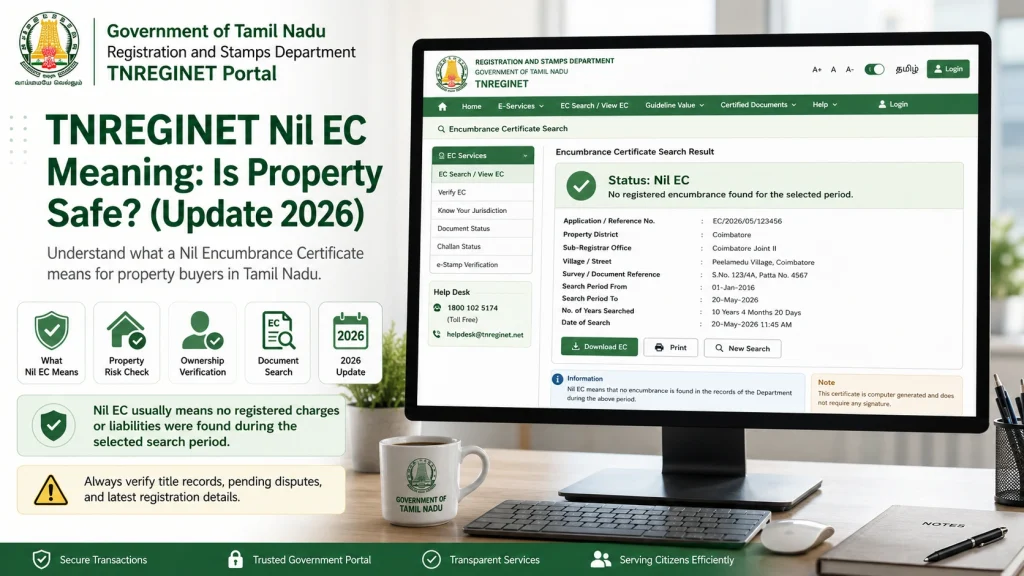
Step 1: Visit TNREGINET
- Open the official TNREGINET portal.
Step 2: Go to E-Services
- Select E-Services and then Encumbrance Certificate.
Step 3: Choose EC Search
- Select View EC or Search EC.
Step 4: Enter Property Details
- Provide district, SRO, village, survey number, and property details.
Step 5: Select Date Range
- Choose the period for which you want to check EC.
Step 6: Submit Search
- Click Search.
Step 7: Review Results
- If no registered transaction exists, TNREGINET may show Nil Encumbrance.
- आप जानकारी डाउनलोड भी कर सकते हैं, अगर आक इसकी जरूरत हो।
Why Can a Property Show Nil EC?
Several reasons can lead to a Nil EC result.
Reason 1: Property Has No Registered Charges
This is the most common reason.
Reason 2: Wrong Survey Number
Incorrect survey details can return Nil EC.
Reason 3: Wrong SRO Selection
Selecting the wrong Sub Registrar Office may produce incorrect results.
Reason 4: Short Search Period
Older transactions may not appear if the date range is limited.
Reason 5: Old Property Records
Some older records may require manual verification.
Important Checks After Getting a Nil EC
Before paying an advance amount, verify these documents.
Sale Deed
Check owner name, property extent, survey number, and registration details.
Parent Documents
Review ownership history. A clean ownership chain reduces legal risks.
Patta
Verify name, survey number, and extent. Patta and sale deed details should match.
Property Tax Receipts
Ensure taxes are paid regularly.
FMB Sketch
Check land measurements and boundaries.
Layout Approval
For plots, verify DTCP approval, CMDA approval, or local authority approval.
Building Approval
For houses and flats, confirm construction approval.
Legal Heir Documents
Important for inherited properties.
Court Case Verification
Consult a property lawyer if needed.
Site Inspection
Visit the property physically. Many issues are discovered only during inspection.
Nil EC vs Encumbrance Found
| Feature | Nil EC | Encumbrance Found |
|---|---|---|
| Mortgage | No | Yes |
| Registered Loan | No | Yes |
| Sale History | Not Found | Found |
| Legal Charge | No | Yes |
| Buyer Risk | Lower | Higher |
| Further Verification Needed | Yes | Yes |
Is Nil EC Enough for a Home Loan?
No. Banks generally ask for EC, sale deed, patta, parent documents, tax receipts, and legal opinion. Even when EC is Nil, banks conduct additional verification.
Is Nil EC Enough for Buying Land?
No. You should also verify ownership chain, revenue records, encroachments, access road rights, and government acquisition notices. A Nil EC alone cannot confirm these details.
Common Mistakes Buyers Make
Expert Tip
A good practice is to obtain an EC for at least 13 to 30 years, depending on the property’s history. The longer the search period, the better your chances of finding old mortgages, settlements, or ownership transfers.
Is Nil EC Good or Bad?
Good: Indicates no registered encumbrance found, helpful for buyers and banks, reduces certain risks.
Not Perfect: Does not verify ownership, does not show all disputes, does not replace legal verification.
Nil EC is good but not enough.
FAQs
Final Words
A Nil EC on TNREGINET is a positive sign, but it should never be treated as final proof that a property is completely safe.
Before buying property in Tamil Nadu, always verify sale deed, parent documents, patta, property tax receipts, layout approval, building approval, legal disputes, site boundaries, and seller identity. The safest approach is to combine a Nil EC with proper legal verification before making any payment.