Why Does Guideline Value Change for the Same Property 2026?
The TNREGINET Guideline Value of a property is the minimum value set by the Tamil Nadu government to calculate stamp duty and registration charges during property transactions. While the Guideline Value serves as a baseline for these fees, it is not fixed and can change over time.
If you’ve noticed that the Guideline Value for the same property has changed, you might be wondering why this happens. There are several reasons for this fluctuation, ranging from government policy changes to market dynamics. Let’s explore why the Guideline Value for the same property can change.
Government Policy and Annual Revisions
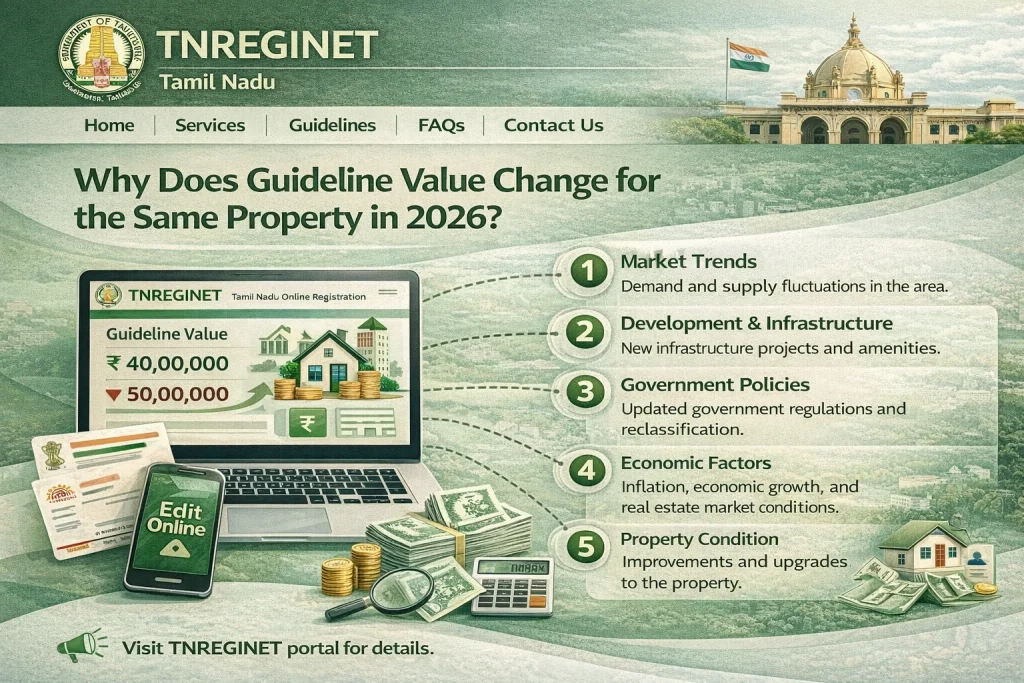
One of the primary reasons for changes in the Guideline Value is the government’s regular revision of property values. The Tamil Nadu government periodically updates the Guideline Value to align with market trends, inflation, and real estate development.
Why It Happens:
Inflation and Economic Factors: Over time, the cost of land and property values increase due to inflation and changes in economic conditions. To reflect these changes, the Guideline Value is updated annually.
Real Estate Market Trends: If the real estate market in a particular area sees rapid growth (or decline), the government may adjust the Guideline Value to reflect the new market conditions.
How It Affects You:
If you check the Guideline Value of your property on TNREGINET at different times, you may notice slight increases or decreases as the government adjusts the value based on these factors.
Changes in Property Location or Development
If there is significant development in the area where the property is located, the Guideline Value may change. Infrastructure development such as new roads, commercial hubs, educational institutions, or transport facilities can increase the demand for properties in the area, which leads to an increase in the Guideline Value.
Why It Happens:
Urbanization and Infrastructure Growth: As an area becomes more developed, the demand for land increases, driving up the market value of properties. Consequently, the Guideline Value is revised to reflect the enhanced desirability of the area.
Change in Zoning: If the property is in a residential zone that is later re-zoned for commercial use, its Guideline Value might change to match the new usage and potential for higher profits.
How It Affects You:
Even if your property remains the same, the Guideline Value could increase as the surrounding area becomes more desirable or better developed. This could also affect stamp duty and registration costs during property transactions.
You can also read: What’s the Difference Between Free EC and Certified EC 2026?
Changes in Property Type or Usage
If the use of the property changes, the Guideline Value may also change. For example, if a residential property is converted to commercial use, the Guideline Value will typically increase to reflect the higher potential earnings from the property.
Why It Happens:
Change in Land Use: Properties that are zoned for commercial, industrial, or mixed-use purposes usually have higher Guideline Values because they have the potential to generate more revenue compared to residential properties.
Upgrading the Property: If you make significant improvements to the property (such as adding a commercial building or upgrading it), the Guideline Value may be revised to reflect the upgraded value.
How It Affects You:
When changing the property’s use (like converting it from a residential to a commercial property), expect the Guideline Value to increase, and this will influence the stamp duty and registration fees.
Changes in Survey Number or Land Size
In some cases, a change in the survey number or a split of land can cause the Guideline Value to change. For example, if a property is subdivided into smaller parcels of land, each parcel may have a different Guideline Value based on its size, location, and marketability.
Why It Happens:
Land Division: When a larger plot of land is subdivided, the Guideline Value may be recalculated based on the new land size and its potential for use.
Parcel-Specific Factors: Smaller parcels of land may have different market dynamics compared to a larger piece of land, affecting the Guideline Value.
How It Affects You:
If you subdivide or consolidate your land, you may notice the Guideline Value for each parcel changing, which will affect property transactions on the newly divided land.
Market Trends and Local Real Estate Conditions
The Guideline Value can also change based on broader market trends in the local real estate sector. For example, if the demand for properties in a particular region increases due to factors like urbanization, industrial development, or new commercial projects, the Guideline Value is revised to match the new market price.
Why It Happens:
Supply and Demand: Areas with high demand and limited supply often see an increase in property values, which directly affects the Guideline Value.
Economic and Social Conditions: Changes in the local economy, social infrastructure, and the real estate market can influence how the Guideline Value is calculated.
How It Affects You:
If your property is in a high-demand area, you may notice that the Guideline Value increases over time, reflecting the area’s popularity in the market.
Periodic Revaluation by the Government
The government periodically reviews the property valuation system and updates the Guideline Value to keep it in line with the real estate market and inflation. These periodic revisions are done based on comprehensive surveys and market research to ensure fairness and accuracy.
Why It Happens:
Fairness and Transparency: Periodic revisions ensure that the Guideline Value is fair and up-to-date, reflecting changes in the market and property values.
Market and Tax Adjustments: The government may adjust the Guideline Value to ensure that property taxes, stamp duties, and registration charges are aligned with real market conditions.
How It Affects You:
Every year, TNREGINET may show updated Guideline Values due to government revisions, which could affect stamp duty costs if you are buying or selling a property.
How to Check the Updated Guideline Value
You can always check the current Guideline Value of your property through the TNREGINET portal. Here’s how to do it:
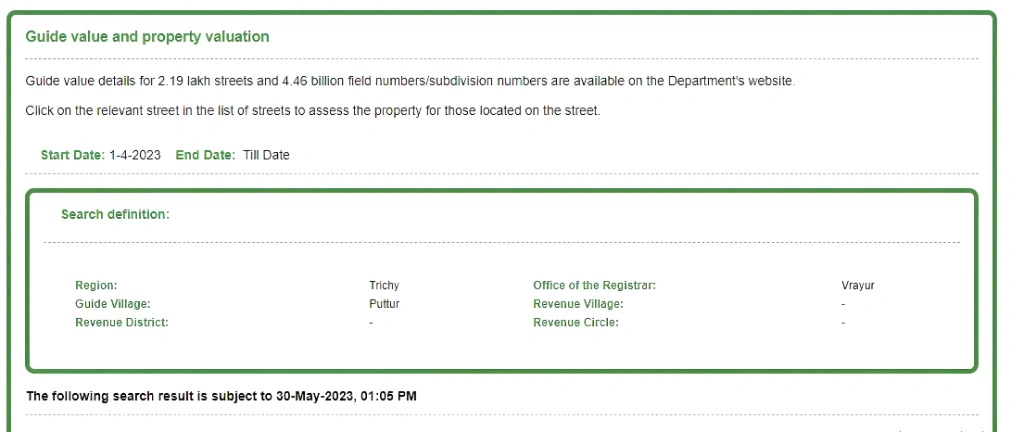
Steps to Check:
Visit the TNREGINET portal: Go to www.tnreginet.gov.in.
Go to ‘Guideline Value’ Section: Navigate to the E-Services section and select ‘Guideline Value Search’.
Enter Property Details: Input details such as the district, taluk, village, and survey number.
View the Guideline Value: The updated value will be displayed, showing the minimum value for the property.
This process will ensure that you are aware of the current Guideline Value and its impact on the stamp duty and registration fees for any property transaction.
FAQs
Final Words
The Guideline Value for a property is subject to change due to various factors such as market trends, government revisions, property development, and infrastructure growth. By understanding the reasons behind these changes, property buyers, sellers, and investors can better plan their transactions and make informed decisions. Always check the latest Guideline Value on TNREGINET to ensure you are paying the correct stamp duty and registration fees for your property.