What Does the EC Show on TNREGINET 2026? Explained Simply
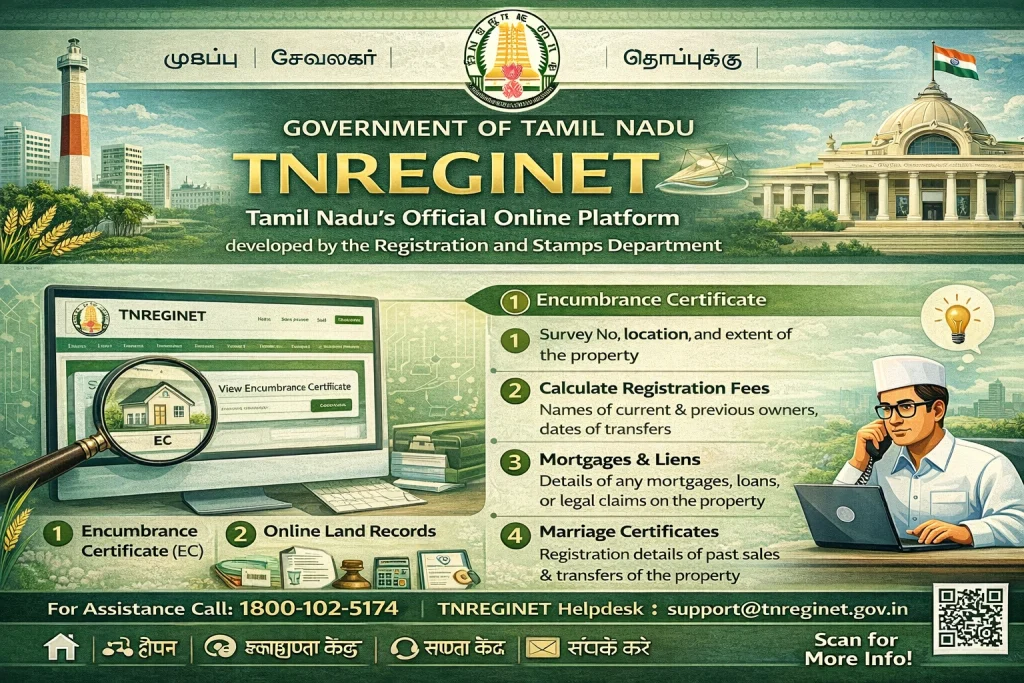
The Encumbrance Certificate (EC) is an important legal document that provides details about the ownership and legal status of a property. On the TNREGINET portal, you can view the EC to check if there are any financial or legal claims (encumbrances) on the property. It’s crucial for confirming whether the property is free from any liabilities, such as loans or mortgages.
In this article, we will explain in simple terms what the EC shows on TNREGINET, and why it’s important for property buyers, sellers, and owners.
Key Details Shown in the EC on TNREGINET
Property Ownership Details
The EC shows the current and previous owners of the property, which helps in identifying who has had ownership rights over the land or building in question. This section will provide:
- Name(s) of the property owner(s)
- Address of the property
- Survey number and plot number
This is essential information, especially if you are considering purchasing a property. It helps you ensure that the property has clear ownership and that the seller is the rightful owner.
Financial Liabilities (Encumbrances)
One of the most important functions of the EC is to reveal any encumbrances tied to the property. Encumbrances refer to any legal or financial claims on the property, such as:
- Mortgages (when a property is used as collateral for a loan)
- Liens (claims due to unpaid debts or taxes)
- Court orders (if the property is involved in any legal disputes)
If the EC shows any encumbrances, it means that the property might have outstanding debts or legal issues that need to be cleared before the transaction can go through.
Transaction Details
The EC also includes information about the transactions related to the property over time. This includes:
- Sale deeds (records of past sales)
- Transfer of ownership details
- Registered mortgages or loans
This section allows you to see if any encumbrances have been placed on the property through transactions like loan agreements or sales. It’s useful for buyers who want to check if there’s a history of legal or financial disputes tied to the property.
Transaction Date and Time
In the EC, you’ll find dates and time of the property-related transactions. The start date and end date of each encumbrance or ownership transfer are typically shown. This is useful to confirm the historical timeline of the property’s ownership and any legal claims against it.
For example, if you’re buying a property and notice that a mortgage was cleared in 2015, the EC will show that it was removed from the property at that time. This helps to ensure that any liabilities were fully settled.
Sub-Registrar Office (SRO) Details
The EC also includes the Sub-Registrar Office (SRO) details where the property transactions were registered. This is important for:
Ensuring that the property records are up to date in the official government database
Verifying the authenticity of the transaction
Confirming the legal registration of the property documents
Each EC is linked to the local SRO where the property was registered. This ensures that the EC reflects the official government records.
You can also read: Understanding the Documents Needed for EC on TNREGINET 2026
Why the EC Is Important
For Buyers:
If you’re considering buying a property, the EC is crucial because it tells you whether the property is free from any legal claims or debts. A clear EC means there are no encumbrances on the property, making it a safe investment. On the other hand, if the EC shows outstanding mortgages, liens, or legal disputes, you might want to reconsider purchasing the property or ask the seller to clear these issues first.
For Sellers:
If you’re selling a property, you’ll need a clear EC to prove that there are no financial or legal issues tied to the property. If there are encumbrances, it’s best to resolve them before listing the property for sale.
For Property Owners:
Even as an owner, you can request the EC to confirm that your property has no encumbrances. It’s a useful document for legal purposes, especially when applying for loans or transferring ownership.
FAQs
Final Words
The Encumbrance Certificate (EC) is a critical document that provides vital details about the legal status and history of a property. On the TNREGINET portal, the EC shows everything from ownership information to financial liabilities, helping buyers, sellers, and owners make informed decisions.
By understanding what the EC includes, you can ensure that your property is free from any legal complications and that you’re making safe, informed property transactions.