TNREGINET Patta vs EC: Key Differences Explained update 2026
When you’re dealing with property transactions in Tamil Nadu, two of the most important documents you’ll encounter are the Patta and the Encumbrance Certificate (EC). Both are crucial for verifying the ownership and legal status of a property, but they serve different purposes and contain different information. Understanding the key differences between the Patta and EC is essential for anyone involved in property transactions.
In this article, we’ll break down the key differences between Patta and EC, explain what each document represents, and why both are necessary for a smooth property transaction.
What is Patta?
A Patta is a government-issued document that serves as legal proof of land ownership in Tamil Nadu. It is typically issued by the Revenue Department and provides information about the land and its current owner.
Key Features of Patta:
You can also read: How to Use TNREGINET EC Search for Flats and Apartments 2026
What is EC (Encumbrance Certificate)?
An Encumbrance Certificate (EC) is a legal document that provides the transaction history of a property. It shows whether the property has any legal encumbrances such as mortgages, loans, or disputes.
Key Features of EC:
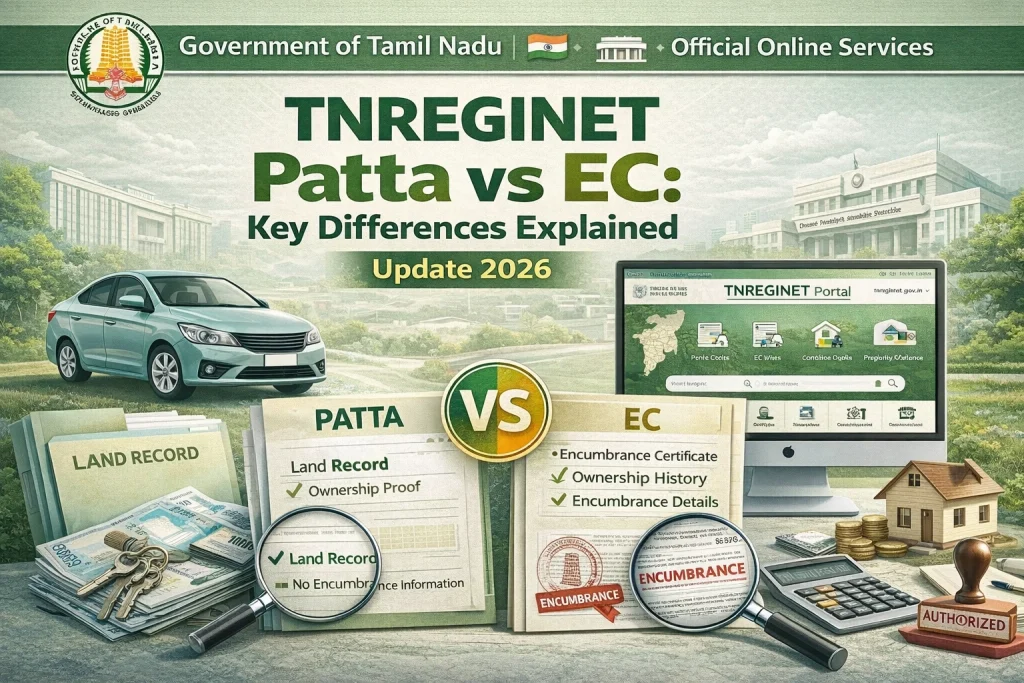
Key Differences Between Patta and EC
| Feature | Patta | Encumbrance Certificate (EC) |
|---|---|---|
| Purpose | Proves land ownership in Tamil Nadu. | Shows the transaction history and encumbrances of a property. |
| Issuer | Issued by the Revenue Department. | Issued by the Registration Department. |
| Content | Contains owner’s name, survey number, and land classification. | Contains details of property transactions, including mortgages, loans, and sales. |
| Used for | Proof of ownership and land title. | Verifying the property’s legal history and loan eligibility. |
| Documents Required | Requires land revenue records and property details. | Requires property details such as the survey number and document number. |
| Legal Purpose | Used to confirm legal ownership and land use. | Used to confirm the legal status of a property and whether it’s free from encumbrances. |
| Period Covered | Usually covers the current owner’s tenure of land. | Can cover historical transactions and be requested for specific periods (usually up to 30 years). |
| Role in Property Transactions | Helps establish ownership during land transfers or inheritance. | Required by banks and legal authorities to confirm that the property is free of encumbrances before loan approval or property sale. |
Why Both Patta and EC Are Important
Both Patta and EC are essential in property transactions. While Patta establishes ownership and the right to use the land, the EC ensures that the property is free from legal issues such as mortgages, unpaid loans, or property disputes. Here’s why both are necessary:
For Property Purchase:
Patta ensures the seller legally owns the land, while EC confirms that the property is free of legal liabilities or financial encumbrances.
For Loan Applications:
When applying for a home loan, banks require both Patta (to prove ownership) and EC (to ensure the property is free from any legal issues that could affect loan repayment).
For Legal Clarity:
If you’re inheriting a property, the Patta confirms ownership, and the EC shows any existing legal encumbrances that could affect your rights.
For Property Disputes:
If there are any disputes regarding ownership or financial claims on the property, EC provides a clear record of transactions, while Patta gives ownership proof.
How to Obtain Patta and EC
Obtaining Patta:
You can apply for Patta online through the Tamil Nadu Revenue Department’s official website or visit the local taluk office to apply.
It is issued based on land revenue records and is usually needed to prove ownership.
Obtaining EC:
To get an Encumbrance Certificate (EC), you can visit the TNREGINET portal, log in, and search for the property using the survey number, document number, and year of registration.
You can also request the EC at the local sub-registrar’s office if you are unable to get it online.
FAQs
Final Words
While Patta and Encumbrance Certificate (EC) are both essential documents in property transactions, they serve different purposes. Patta establishes ownership and land use, while the EC confirms the legal history of the property and checks for any encumbrances like loans or disputes.
Ensuring that both documents are in order can help you avoid legal complications and proceed with your property transactions with confidence.
Always make sure to cross-check both Patta and EC when buying, selling, or transferring property in Tamil Nadu.