How to Use Guideline Value for Stamp Duty on TNREGINET (2026)
When buying property in Tamil Nadu, the Guideline Value is a key factor in calculating stamp duty. Understanding how to use it ensures you pay the correct amount and avoid legal issues. This guide explains everything in simple steps.
What Is Guideline Value?
Guideline Value (also called circle rate) is the minimum value assigned by the government for property transactions in a specific area.
Example: If your property’s market value is ₹50 lakh but the guideline value is ₹45 lakh, stamp duty will be calculated based on the higher of the two, depending on rules.
You can also read: EC PDF vs Digitally Certified Copy: What You Need to Know
Why Guideline Value Matters for Stamp Duty
Use Guideline Value for Stamp Duty on TNREGINET Step by Step (2026)
Step 1: Find the Guideline Value on TNREGINET
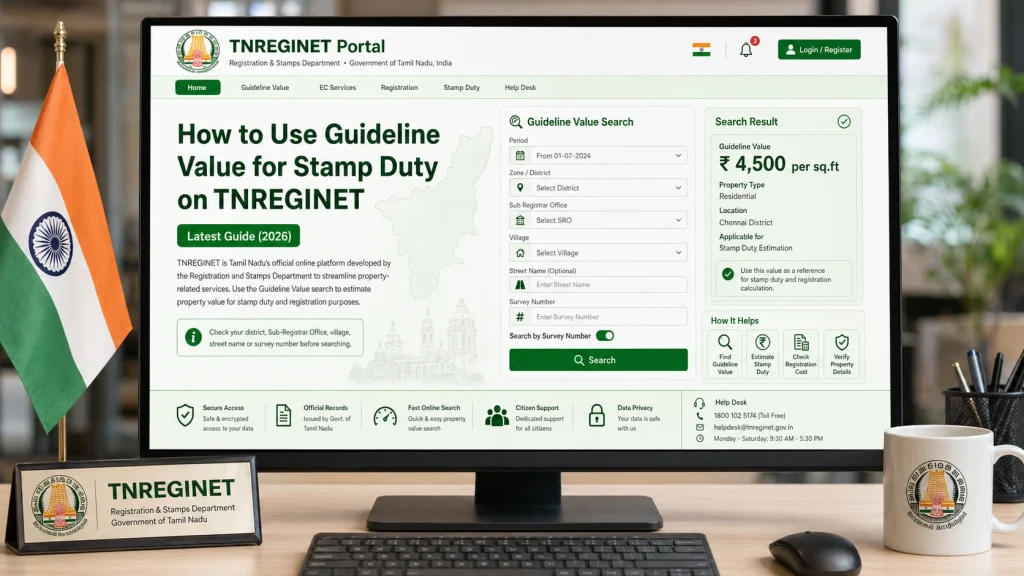
Go to TNREGINET official portal.
Navigate to the Guideline Value / Circle Rate section.
Select the district, SRO, and property type (residential, commercial, etc.).
Enter the property area in sq.ft or sq.m to get the guideline value.
Tip: Always check the latest guideline values, as the government updates them periodically.
Step 2: Compare With Market Value
- Market value is the price agreed between buyer and seller.
- Guideline value is the minimum taxable value recognized by the government.
- For stamp duty, most authorities consider the higher of market value or guideline value.
Example:
- Market value: ₹55 lakh
- Guideline value: ₹50 lakh
- Stamp duty will be calculated on ₹55 lakh (the higher value).
Step 3: Calculate Stamp Duty
Check TNREGINET or state government rates for stamp duty percentage.
Apply the percentage on the applicable value (higher of market or guideline value).
Add other charges if applicable, such as registration fees.
Example:
- Property value: ₹50 lakh
- Stamp duty: 7%
- Stamp duty amount: ₹3.5 lakh
Tip: Some portals offer online stamp duty calculators to make this step easier.
Step 4: Use Guideline Value for Bank and Legal Purposes
Banks may verify that stamp duty was paid based on guideline value before sanctioning loans.
During property disputes or legal verifications, authorities check if duty was paid according to the government’s guideline value.
Always keep a copy of the TNREGINET guideline value report with your sale deed.
Quick Tips
Always use the latest guideline value to avoid fines or revaluation.
Compare market value and guideline value before registering property.
For commercial or multi-unit properties, check the specific guideline value per unit or floor area.
Download and save the official TNREGINET PDF for your records.
FAQs
Final Words
Using the guideline value correctly ensures legal compliance, accurate stamp duty payment, and smooth property registration. Always check TNREGINET for the latest values, compare with market value, and keep proper records for banks and authorities.
This simple approach prevents mistakes and ensures a hassle-free property transaction.