TNREGINET Guideline Value: What’s Included Update 2026?
If you’re planning to buy or sell property in Tamil Nadu, understanding the Guideline Value is crucial. It’s not just about getting the right price — the Guideline Value also plays a role in calculating stamp duty and determining the minimum registration value for property transactions. The TNREGINET Portal is the government’s online platform where you can check this value quickly. But what exactly does the Guideline Value include? Let’s break it down.
What Is the Guideline Value?
The Guideline Value is the minimum price set by the government for registering property. This value is used by the Tamil Nadu government to calculate stamp duty and registration charges during property transactions.
The government sets this value based on various factors, such as:
You can easily access the Guideline Value through the TNREGINET Portal to see how much your property is valued at for registration.
You can also read: How to Download Guideline Value Certificate from TNREGINET
What’s Included in the Guideline Value?
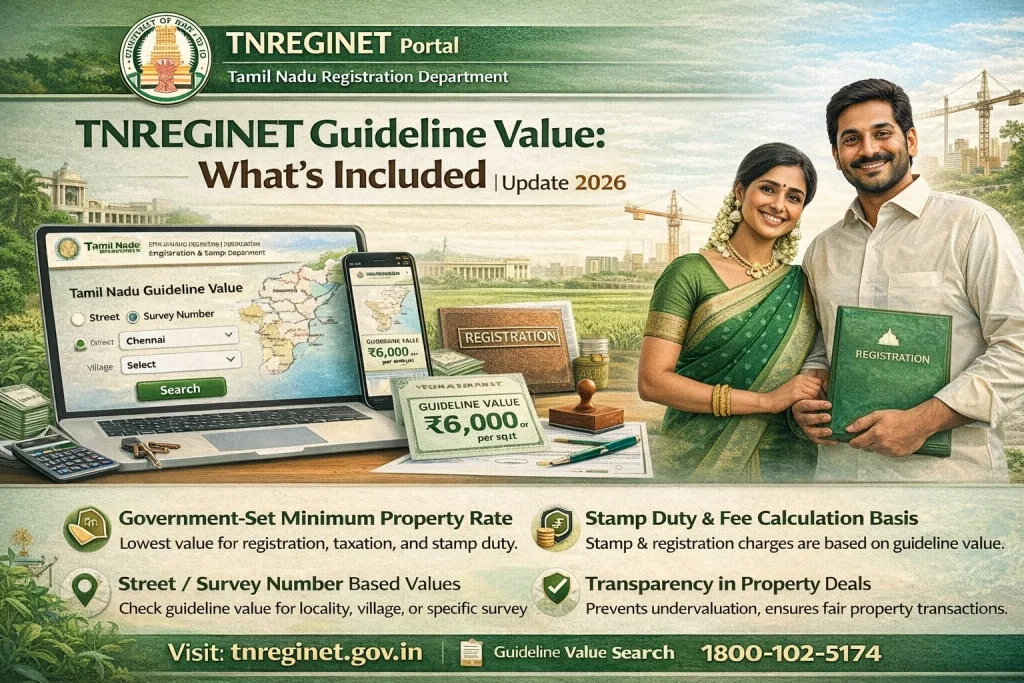
Land Location
- The location is one of the most significant factors influencing the Guideline Value. Areas with better infrastructure, close to markets, schools, and hospitals, tend to have a higher Guideline Value. Rural or remote areas usually have a lower value.
- For example:
- Properties in cities like Chennai or Coimbatore will have a higher Guideline Value than properties in smaller towns or villages.
Land Use (Residential, Commercial, Agricultural)
- The Guideline Value varies depending on the land’s usage:
- Residential Land: Property meant for living, such as homes or apartments, usually has a lower Guideline Value than commercial land.
- Commercial Land: Land intended for business purposes (offices, shops, factories) will often have a higher Guideline Value.
- Agricultural Land: Farm or agricultural land has a lower Guideline Value since it is primarily for farming purposes.
Property Size (Area)
- The larger the property, the higher the Guideline Value. The value is usually calculated per square foot (sq. ft) or square meter (sq. m), and this value increases with the land’s area.
- For example:
- A 2,000 sq. ft residential plot in a prime location will have a higher Guideline Value than a similar plot in a less developed area.
Infrastructure Development
- Nearby infrastructure such as roads, public transportation, and utilities (water, electricity, etc.) plays a huge role in determining the Guideline Value. Properties near major roads, shopping centers, or developed areas generally have a higher value.
- For example:
- Properties near metro stations or major highways usually have a higher Guideline Value than those in more isolated areas.
Floor Area Ratio (FAR) and Zoning Laws
- Floor Area Ratio (FAR) determines how much floor space you can build on a plot. A higher FAR increases the potential construction area, which in turn increases the Guideline Value. Additionally, zoning laws — regulations that define how land can be used — also impact the value. Residential land converted to commercial use will have a higher Guideline Value.
Property Type (Land, Flat, House)
- Vacant Land: The guideline value for empty plots will be lower than a developed property like an apartment.
- Built Property: A house or flat that’s already constructed will have a higher Guideline Value because it includes the value of the structure.
Age and Condition of Property
- The age and condition of the property can sometimes influence its Guideline Value. Older properties may have a lower value, while newly built properties or well-maintained ones might have a higher value.
How to Check the Guideline Value on TNREGINET?
It’s easy to check the Guideline Value of any property using the TNREGINET Portal. Here’s how you can do it:
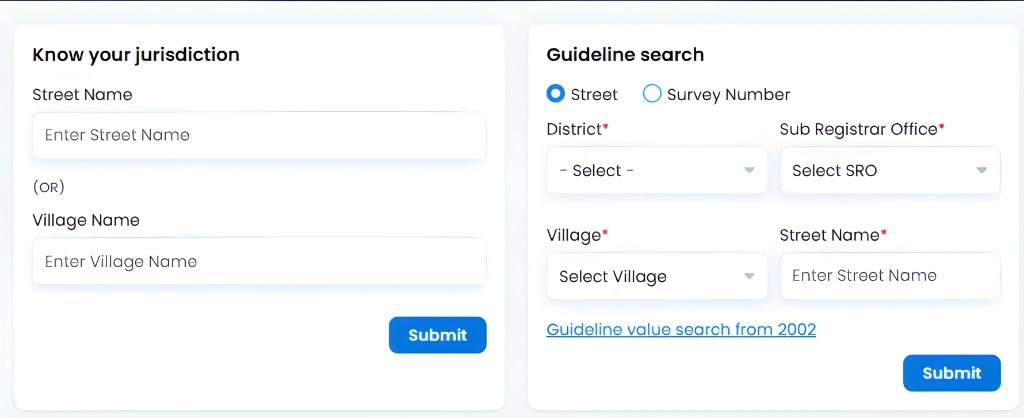
Step-by-Step Process:
Visit the TNREGINET Portal: Go to the official TNREGINET Portal on your web browser.
Enter Property Details: Input information such as district, sub‑registrar office, village, and street name.
Select the Guideline Value Date: Choose the year or date for which you want to check the Guideline Value.
Search for the Value: After entering the details, click the Search button.
View the Guideline Value: The portal will show the minimum guideline value for your property.
You can then download the Guideline Value certificate for legal use.
Why Should You Check the Guideline Value?
For Stamp Duty Calculation
The Guideline Value is essential for calculating stamp duty — a tax you pay when buying a property. If the Guideline Value is lower than the market value of the property, stamp duty will be calculated on the higher value.
Avoid Overpaying
Checking the Guideline Value ensures you don’t end up overpaying during the property registration process. You’ll know whether the market price aligns with the official value.
Legal Compliance
For legal purposes, the Guideline Value is used to ensure that property transactions follow government regulations. It helps standardize the value of properties and ensures fair pricing for both buyers and sellers.
FAQs
Final Words
The Guideline Value is more than just a number — it plays a crucial role in property transactions, affecting everything from registration to tax calculations. By understanding what’s included in the Guideline Value, you can better navigate property buying, selling, or registration processes in Tamil Nadu. Whether you’re looking to calculate stamp duty, verify a property’s worth, or simply get a better idea of your property’s value, the TNREGINET Portal makes it easy and accessible.